House Construction Step by Step in Pakistan: Foundation to Finishing (2026)
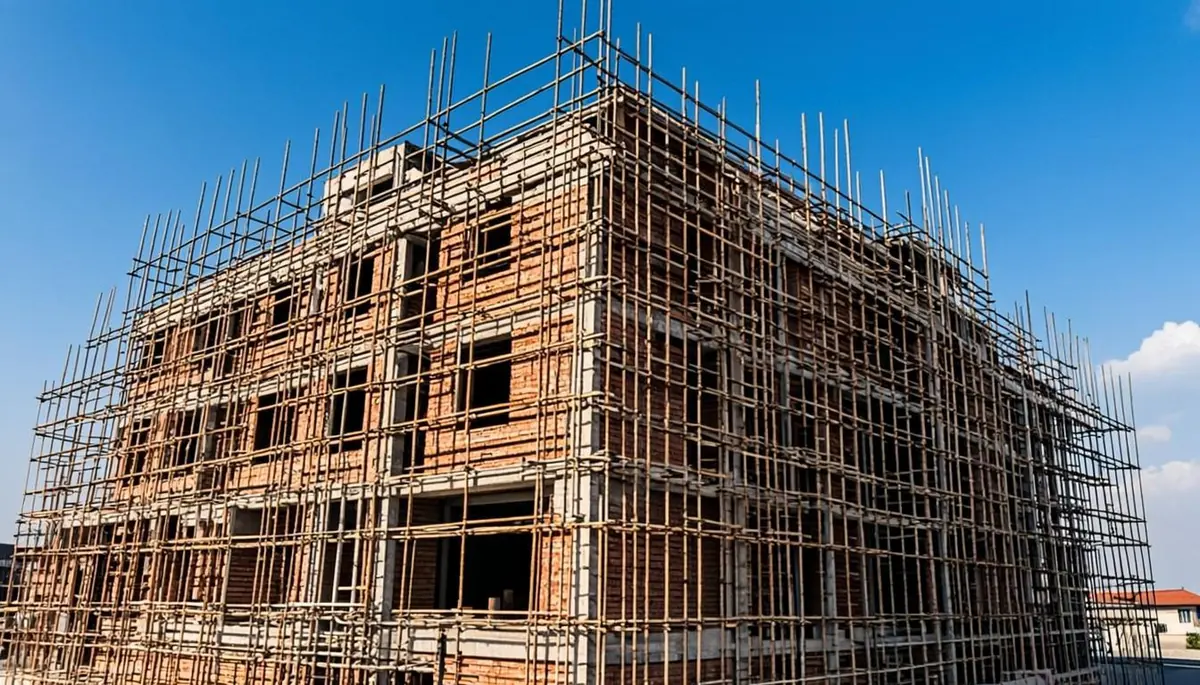
Building your first house in Pakistan can feel like watching a puzzle being assembled by strangers. Materials appear and disappear, money leaves in bursts, and nobody quite tells you what comes next. Understanding the 12 stages of house construction changes that: you know what to buy before each stage, what your money is doing at any moment, and when a delay is normal versus when to push your contractor.
This is the complete roadmap — from an empty plot in Jhelum to handing over the keys.
The 12 Stages at a Glance
| # | Stage | Typical Duration | Major Materials |
|---|---|---|---|
| 1 | Design & approvals | 2–4 weeks | Architect fee, drawing prints |
| 2 | Site marking & excavation | 1–2 weeks | Excavator/labour |
| 3 | Foundation (footings, piers) | 2–4 weeks | Cement, bricks, crush, sand, steel |
| 4 | Backfilling & plinth | 1 week | Ravi sand, damp proofing |
| 5 | Masonry + columns up to lintel | 4–8 weeks | Bricks, cement, steel |
| 6 | Lintel beam | 1–2 weeks | Cement, steel, shuttering |
| 7 | RCC slab casting + curing | 1 week + 14 days curing | Cement, crush, sand, steel |
| 8 | Upper masonry & parapet | 3–6 weeks | Bricks, cement |
| 9 | Electrical & plumbing chases | 2–3 weeks | Conduit, wiring, PVC pipes |
| 10 | Plaster (internal + external) | 3–5 weeks | Cement, Chenab sand |
| 11 | Waterproofing & roof treatment | 1–2 weeks | Chemicals, membranes |
| 12 | Finishing (tiles, paint, wood, fixtures) | 3–6 months | Tiles, paint, wood, fixtures |
A single-storey 5 marla house typically takes 6–9 months end to end; add 3–5 months for double storey. Rainy season and money-flow gaps are the two biggest timeline killers.
Stage 1 — Design & Approvals
Finalize the architectural drawing (covered area, room layout, elevation) and get the map approved — by your housing society (like CITI Housing) or the TMA Jhelum for private plots. Skipping formal approval has haunted many owners at resale or utility connection time.
Money tip: finalize the drawing before buying anything. Every mid-construction design change multiplies cost.
Stage 2 — Site Marking & Excavation
The drawing is transferred to the ground with lime/burma lines, then excavation to foundation depth (typically 3–5 feet in Jhelum's soil, deeper where the structural engineer demands). Get the excavation checked against the drawing — depth and column positions are almost impossible to fix later.
Stage 3 — Foundation
PCC base, column footings and pier/brick foundation walls go in, ending with a damp proof course (DPC) that blocks ground moisture from climbing your walls forever. Foundation consumes a surprising share of total cement and bricks.
- Planning quantities? Our brick calculation guide and cement rate breakdown cover the numbers.
- Quality note: foundations are the one place never to accept second-grade material. Awwal bricks and quality steel pay for themselves here.
Stage 4 — Backfilling & Plinth
Excavated soil (ideally with added sand) is compacted back in layers, and the plinth/floor level is prepared. Ravi sand is fine for filling — this is where cheaper material belongs; our Chenab vs Ravi sand guide explains exactly why.
Stage 5 — Masonry & Columns up to Lintel Level
The visible house finally rises: brick masonry walls and RCC columns grow together to lintel height (~7 feet). This is the longest grey-structure stage — 4 to 8 weeks depending on mason strength and cash flow. Insist on soaked bricks (dry bricks steal water from mortar) and plumb, straight walls checked with a level, not an eyeball.
Stage 6 — Lintel Beam
A continuous RCC beam ties all walls together over door and window openings. Small stage, big role — it distributes slab loads and resists settlement cracking over openings.
Stage 7 — RCC Slab Casting (The Big Day)
Centering and shuttering go up, steel fixers tie the mesh per the drawing, and the slab is poured in one continuous session — typically a single long day for a 5 marla house. Your presence (or a trusted representative's) matters here:
- Mix 1:2:4 batched by measure, not guesswork
- Cover the steel with proper spacer blocks — steel sitting on shuttering is wasted steel
- Cure like it's the most important thing you'll do — because it is. Follow our concrete curing guide: minimum 7 days, ideally 14 in summer.
The slab also needs the right aggregate — see our Margalla vs Sargodha crush guide before ordering bajri.
Stage 8 — Upper Masonry & Parapet
Walls resume above the slab and the parapet closes the roof edge. (Double storey: slab casting repeats here for the first floor.)
Stage 9 — Electrical & Plumbing Chases
Before plaster, electricians and plumbers cut chases for conduit wiring and PVC water lines. Two rules save lifelong regret: photograph every wall before plastering (your future map of hidden pipes), and pressure-test plumbing lines before closing them in.
Buying tip: this is the stage for your hardware fittings purchase — buy with the stage, not all at once.
Stage 10 — Plaster
Internal (12 mm, often 1:4 or 1:6) and external plaster level and seal the masonry. Plaster quality decides how your paint will look for the next 15 years. Use clean Chenab sand, cure the plaster for a week, and check surfaces with a straight edge at lamp light.
Stage 11 — Waterproofing & Roof Treatment
The roof gets heat-proofing and water-proofing treatment (membranes, chemicals, proper slope to outlets). Jhelum's monsoon tests every roof annually — this Rs. 60,000–150,000 stage protects lakhs of finishing work below it. Our roof & basement waterproofing guide covers the options.
Stage 12 — Finishing (Where the House Becomes Yours)
The longest and most budget-flexible stage, in rough order:
- Flooring & tiles — see our tiles selection guide
- Woodwork — doors, wardrobes, kitchen
- Paint — after wood sanding settles dust; two primer + two top coats is standard. Rates and brand picks in our paint price list and best paint brands guide
- Electrical fixtures, fixtures, glass, grills
- External: driveway, lawn, elevation paint
How Money Flows Across Stages
| Phase | Share of Total Build Cost |
|---|---|
| Foundation + grey structure | ~55 – 60% |
| Finishing | ~40 – 45% |
Finishing is infinitely stretchable (tiles, paint and fittings have no price ceiling) — grey structure is not. If money must pause, pausing cleanly between stages costs almost nothing; pausing mid-slab does not bear thinking about.
For exact budgeting, our guides break down 5 marla construction cost in Jhelum, cost per square foot and cost per marla — and our free construction calculators convert your drawing into material quantities in minutes.
One Practical Warning
The most expensive words in Pakistani house construction are "chalo, chal jayega" (it'll do). Materials that get substituted "for now" — lighter steel, dirty sand, uncured slab — cannot be upgraded later without breaking something. Buy genuine materials at each stage and hold your contractor to the basics: soaked bricks, measured mixes, full curing.
Building in Jhelum? We Deliver Every Stage
From foundation bricks to final paint, Khokhar Traders supplies genuine, brand-sealed materials at honest rates across Jhelum city and nearby areas — with the free advice to match. Call or WhatsApp +92 331 5083 648 with your drawing or stage list, or visit us. Building with a contractor instead? Our guide on choosing the right construction company in Jhelum tells you exactly what to ask before signing.
Our Stage-by-Stage Site Checklist
We are not standing on your site every day — but we do deliver into Jhelum's sites every week, and the same small things decide whether a stage goes smoothly. This is the checklist we hand to customers before each stage:
Before foundation: soil report or at least a documented depth decision; drawings on site (not in a drawer); steel Grade 60/40 separated and labelled; cover blocks ready.
Masonry stage: bricks from a checked kiln load (see our brick guide for the tests); lines and plumb-bobs actually in use; cement brand consistent and stored off the ground on plastic sheets; joints struck clean while green.
Before the slab pour: spacing matches the drawings; chair bars present so the top steel stays top; electrical and plumbing conduits placed and photographed — photograph every wall before plaster hides it forever; enough hands for placement and vibration; curing plan with named responsibility.
Plaster stage: sand quality agreed by touch and source, not just "miti theek hai"; scaffolding safe; curing days on the wall with chalk marks.
Finishing: levels checked with a genuine level, not an eye; paint prep sanded between putty coats.
Two habits cost nothing and save the most: photograph every stage, and get material delivered stage-wise rather than dumped all at once. Send us your drawing and stage dates and we will build the supply schedule around them.
Questions about your own build? Call or WhatsApp +92 331 5083 648 — we answer with today's facts, not guesses.
Delivery Areas & Charges
Plain and simple — here is exactly how delivery works at Khokhar Traders.
Where we deliver: Locally within about 10–15 km of Jhelum city centre — Jhelum City, Civil Lines, Bilal Town, Kala Gujran, Haji Aima, Kotla Aima, Katchery, Mohamdi Chowk, Chishtian Mohallah, Madina Town, CITI Housing, and many more areas around Jhelum city centre. A little further out? We may still be able to deliver with extra charges — just ask.
Delivery charges: Agreed at the time of order. Share your location with our team and we calculate the exact distance, then confirm a fair delivery charge before anything is loaded. Prefer to save on transport? You are welcome to arrange your own transport.
Ex-shop rates vs delivered rates: Shop materials — cement, iron rebars (sariya), chips, tile bonds, paints, hardware — are priced at ex-shop rates: either we deliver at the agreed charge, or you arrange your own transport. Loose materials — sand, aggregate (crush), soil and gassu for foundation filling, and bricks on a full trolley — usually come with delivery included.
Full-truck cement delivery: We can deliver a full truck of 350–500 cement bags straight to your site (if a bigger truck can safely reach it). A small loader carries only 25–35 bags per trip — one full truck saves you many loader runs and real money on local transport.
Rates change daily: A rate confirmed over the phone is valid for that time of day only. A rate is locked with an official order and advance payment — we confirm the final rate and delivery charge together before dispatch.
Full details in our Shipping Policy — or call / WhatsApp +92 331 5083 648 and we will confirm today's rate and your delivery charge in minutes.
Good to Know Before You Act
Two honest notes about everything published in our guides.
Rates are market estimates and they change daily: any price or rate mentioned in our guides is an indicative market estimate for planning only — material rates in Pakistan fluctuate, sometimes daily. It does not matter what a guide, blog or old quotation says — the final and correct rate is always the one our team confirms with you on the day. Call or WhatsApp +92 331 5083 648 for today's exact price. A rate is locked only with an official order and advance payment.
No warranty on results — always speak to a professional first: quantities, mix ratios, material suggestions and methods described in our guides are general educational guidance, not instructions for your specific site. Results after mixing or using any material in any ratio depend on site conditions, water quality, handling, curing, storage and workmanship — we do not warrant or guarantee any result arising from following general guidance. Before you act, always speak with your engineer, contractor or a qualified professional — or ask our team for guidance on materials.
Planning a stage of your project? Contact us first — we will gladly go through your material list, today's rates and the right products for your site before you buy.
Related Articles
Best Month to Start House Construction in Pakistan — A Jhelum Answer
There is no magic month, but there are smart ones. How monsoon, winter and peak season change foundations, curing, mistri availability and material rates — and the two windows local builders actually aim for.
10 Marla House Construction Cost in Pakistan (2026) — Full Breakdown
What a 10 marla house really costs in 2026: grey structure quantities (bricks, cement, steel, sand, crush), labour rates, finishing costs and realistic total budgets from economy to premium.
Marla to Square Feet Conversion in Pakistan (2026) — Plot Size Guide
How many square feet in 1 marla? The full Pakistan plot size guide: marla, kanal, gaz and acre conversion tables for both the 225 and 272.25 sq ft standards, with a free converter and plot division tool.