Steel (Saria) Selection for House Construction in Pakistan: Grades, Sizes & Quality Guide (2026)
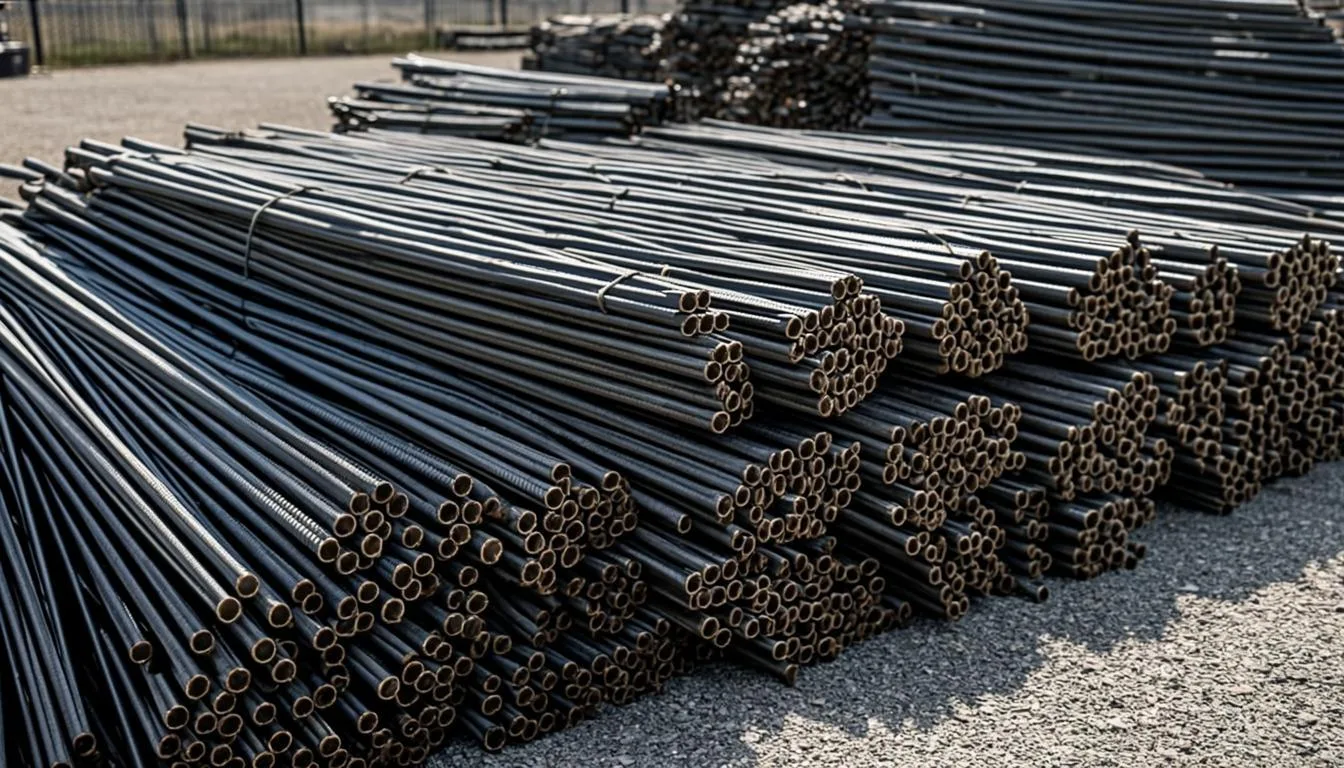
Steel (Saria) Selection for House Construction in Pakistan: Grades, Sizes & Quality Guide (2026)
Steel reinforcement, commonly known as saria, is one of the most important structural materials used in modern construction. Every foundation, beam, column and roof slab depends on correctly selected reinforcement to provide long-term strength, durability and structural safety. Whether you are constructing a family home, extending an existing property or managing a commercial project, choosing suitable reinforcement should never be treated as a routine purchase.
Across Pakistan, homeowners often compare steel prices without considering manufacturing quality, certification or engineering requirements. While cost always influences construction budgets, selecting reinforcement purely because it is cheaper can compromise structural performance and increase long-term maintenance costs.
This guide explains the commonly used reinforcement grades, standard bar sizes, practical quality checks before purchasing and the common mistakes homeowners should avoid when buying construction steel.
Table of Contents
- Why Steel Quality Matters
- Understanding Steel Grades
- Selecting the Right Bar Sizes
- Checking Steel Quality Before Purchase
- Proper Storage Before Use
- Frequently Asked Questions Quality reinforcement steel is an investment in the safety, durability and long-term value of every building.
Why Steel Quality Matters
Concrete performs exceptionally well under compression but requires reinforcement steel to resist tensile forces. Together they create reinforced concrete capable of supporting heavy structural loads while maintaining stability throughout the building's lifespan.
Quality reinforcement bars improve bonding with concrete, minimise structural cracking and increase resistance to environmental stresses including temperature changes and seismic movement.
- Improves structural safety
- Increases building lifespan
- Provides better earthquake resistance
- Reduces structural cracking
- Improves concrete bonding
- Reduces long-term repair costs
Understanding Steel Grades
Reinforcement steel is manufactured in several grades based on its yield strength and engineering applications. Modern residential construction throughout Pakistan commonly uses Grade 60 reinforcement because it provides an excellent balance between strength, flexibility and durability.
| Steel Grade | Typical Application |
|---|---|
| Grade 40 | Light residential structures |
| Grade 60 | Modern residential and commercial buildings |
| High Strength Grades | Special engineering projects and heavy structures |
Selecting the Right Reinforcement Bar Sizes
Engineers specify reinforcement sizes according to structural calculations. Although homeowners should always follow engineering drawings, understanding common reinforcement sizes helps when purchasing construction materials.
| Bar Diameter | Typical Application |
|---|---|
| 10 mm | Roof slabs and light reinforcement |
| 12 mm | Beams, slabs and secondary reinforcement |
| 16 mm | Columns and primary beams |
| 20 mm and above | Heavy structural members and commercial buildings |
Using reinforcement sizes smaller than those specified by the structural engineer should never be considered as a method of reducing construction costs.
Checking Steel Quality Before Purchase
Before purchasing reinforcement steel, it is important to inspect both the product and the supplier. Certified manufacturers follow recognised production standards and quality control procedures that help ensure consistent structural performance. Purchasing from reputable suppliers also reduces the risk of counterfeit or substandard reinforcement entering your project.
When inspecting reinforcement bars, look for uniform rib patterns, consistent bar diameter and a clean surface free from excessive rust or visible damage. Minor surface oxidation caused by storage is generally acceptable, but deep corrosion or scaling should be avoided.
- Purchase steel produced by recognised manufacturers.
- Verify bar diameter and specifications.
- Inspect rib patterns for consistency.
- Avoid severely rusted or damaged bars.
- Request invoices and product documentation where available.
- Buy from trusted construction material suppliers.
Proper Storage Before Construction
Even high-quality reinforcement steel can deteriorate if stored incorrectly before installation. Proper storage protects the material from excessive moisture, contamination and unnecessary handling damage.
| Recommended Practice | Benefit |
|---|---|
| Store above ground level | Reduces moisture exposure |
| Cover during heavy rain | Prevents unnecessary corrosion |
| Separate different bar sizes | Improves installation efficiency |
| Handle carefully during unloading | Prevents bending and surface damage |
Common Mistakes When Buying Steel (Saria)
Many construction problems begin long before concrete is poured. Choosing reinforcement based only on price or purchasing from unknown suppliers can increase project risks and long-term maintenance costs.
- Choosing the cheapest available reinforcement without checking quality.
- Ignoring the structural engineer's specifications.
- Mixing different steel grades within the same structural member.
- Buying reinforcement from unreliable suppliers.
- Improper storage before installation.
- Failing to inspect deliveries before accepting materials. Selecting quality reinforcement steel today helps protect your investment for decades to come.
Choosing a Reliable Construction Material Supplier
A dependable supplier does more than deliver materials. Reliable suppliers help customers select appropriate products, maintain consistent stock availability and provide timely deliveries that keep construction projects moving without unnecessary interruptions.
When comparing suppliers, consider product quality, availability, delivery capability, customer service and overall reputation rather than focusing solely on the lowest price.
Frequently Asked Questions
Which steel grade is commonly used for residential construction in Pakistan?
Grade 60 reinforcement bars are widely used for modern residential construction because they provide excellent structural performance for reinforced concrete buildings.
Does surface rust make reinforcement steel unusable?
Light surface oxidation is generally acceptable, but reinforcement with heavy corrosion, scaling or visible damage should be avoided.
Can different bar sizes be used interchangeably?
No. Reinforcement sizes should always match the structural engineer's drawings and specifications.
Why is buying from a trusted supplier important?
Trusted suppliers help ensure consistent product quality, reliable deliveries and genuine construction materials that comply with recognised manufacturing standards.
Khokhar Building Material Supplier proudly supplies quality reinforcement steel (saria), cement, bricks, sand, crush, aggregates and other construction materials to residential and commercial projects throughout Jhelum and surrounding areas. Choosing quality materials from reliable suppliers helps deliver stronger, safer and longer-lasting buildings. Category: Building Materials
Need Help With Your Project?
Whether you need material estimates or product recommendations, our team at Khokhar Traders is here to assist you. Contact UsUse Calculators
Related Articles
[Building Materials
Waterproofing Guide for Roofs and Basements in Jhelum (2026)
A practical guide to waterproofing roofs and basements before monsoon season, covering methods, materials, and cost factors for homeowners in Jhelum. Aug 6, 2026](/blog/waterproofing-guide-roofs-basements-jhelum-2026)[Building Materials
Sand & Crush Rate in Jhelum (2026): Complete Buying Guide
Looking for sand and crush rates in Jhelum? Learn about different sand types, crush grades, seasonal price changes, material estimation, and buying tips for construction projects. Jun 25, 2026](/blog/sand-crush-rate-jhelum-2026)[Building Materials
Brick Best Practices: Quality Control, Masonry Construction & Expert Guide for Builders and Homeowners
A complete expert guide on brick construction best practices including masonry techniques, quality control, material selection, cost comparison, and real-world building insights for homeowners and contractors. Jun 14, 2026](/blog/brick-best-practices-quality-control-masonry-construction-guide)
Delivery Areas & Charges
Plain and simple — here is exactly how delivery works at Khokhar Traders.
Where we deliver: Locally within about 10–15 km of Jhelum city centre — Jhelum City, Civil Lines, Bilal Town, Kala Gujran, Haji Aima, Kotla Aima, Katchery, Mohamdi Chowk, Chishtian Mohallah, Madina Town, CITI Housing, and many more areas around Jhelum city centre. A little further out? We may still be able to deliver with extra charges — just ask.
Delivery charges: Agreed at the time of order. Share your location with our team and we calculate the exact distance, then confirm a fair delivery charge before anything is loaded. Prefer to save on transport? You are welcome to arrange your own transport.
Ex-shop rates vs delivered rates: Shop materials — cement, iron rebars (sariya), chips, tile bonds, paints, hardware — are priced at ex-shop rates: either we deliver at the agreed charge, or you arrange your own transport. Loose materials — sand, aggregate (crush), soil and gassu for foundation filling, and bricks on a full trolley — usually come with delivery included.
Full-truck cement delivery: We can deliver a full truck of 350–500 cement bags straight to your site (if a bigger truck can safely reach it). A small loader carries only 25–35 bags per trip — one full truck saves you many loader runs and real money on local transport.
Rates change daily: A rate confirmed over the phone is valid for that time of day only. A rate is locked with an official order and advance payment — we confirm the final rate and delivery charge together before dispatch.
Full details in our Shipping Policy — or call / WhatsApp +92 331 5083 648 and we will confirm today's rate and your delivery charge in minutes.
Good to Know Before You Act
Two honest notes about everything published in our guides.
Rates are market estimates and they change daily: any price or rate mentioned in our guides is an indicative market estimate for planning only — material rates in Pakistan fluctuate, sometimes daily. It does not matter what a guide, blog or old quotation says — the final and correct rate is always the one our team confirms with you on the day. Call or WhatsApp +92 331 5083 648 for today's exact price. A rate is locked only with an official order and advance payment.
No warranty on results — always speak to a professional first: quantities, mix ratios, material suggestions and methods described in our guides are general educational guidance, not instructions for your specific site. Results after mixing or using any material in any ratio depend on site conditions, water quality, handling, curing, storage and workmanship — we do not warrant or guarantee any result arising from following general guidance. Before you act, always speak with your engineer, contractor or a qualified professional — or ask our team for guidance on materials.
Planning a stage of your project? Contact us first — we will gladly go through your material list, today's rates and the right products for your site before you buy.
Related Articles
Tile Bond vs Cement Mortar for Fixing Tiles — What Actually Holds
Why floor tiles sound hollow within a year, when ordinary cement mortar is fine, when a proper tile adhesive earns its keep, and how far one 20kg bag of tile bond really goes.
White Cement in Pakistan — 7 Everyday Uses We See From Our Counter
Maple Leaf white cement is not just for masons — grout lines, crack filling, elevation borders, pots and crafts. Where white cement beats wall putty, where putty wins, and how to apply it so it stays white.
How Long Does a Cement Bag Last? Shelf Life, Storage & Quick Checks
A cement bag is not wine — it does not improve with age. Why cement loses strength in humid storage, how to read the packing date, four quick checks before you accept a bag, and how fresh stock should be handled.