Margalla vs Sargodha Crush (Bajri): Sizes, Rates & Which One for Your Slab
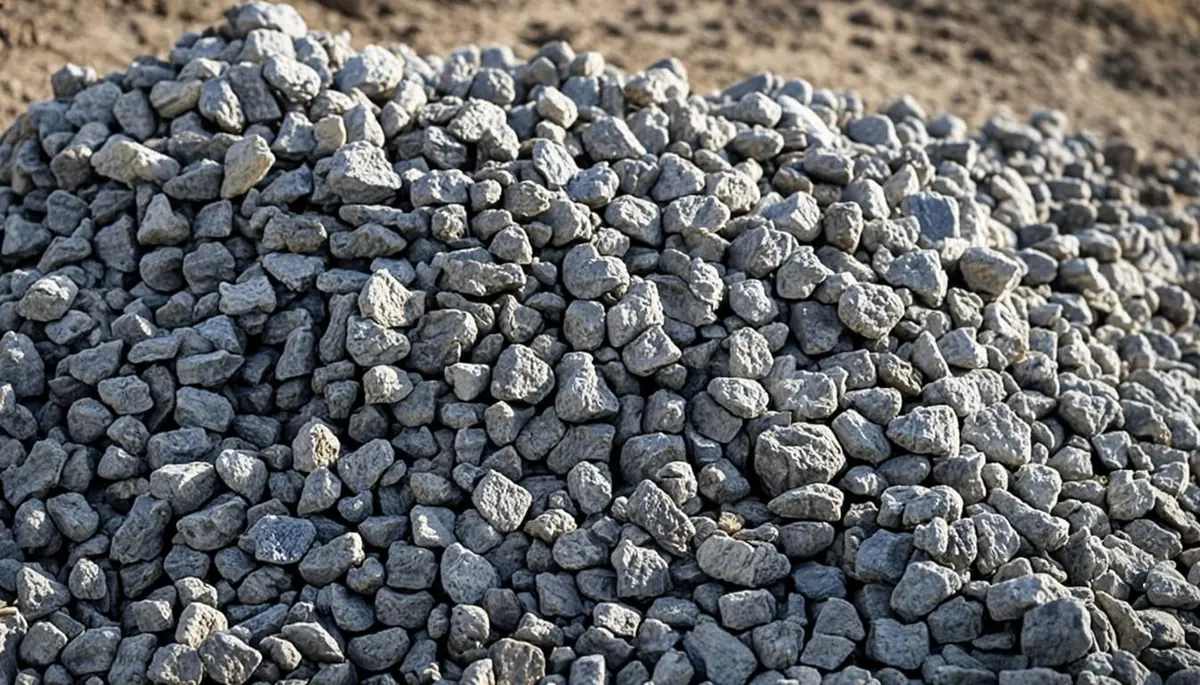
If cement is the glue of your slab, crush (bajri / aggregate) is its skeleton — around 60–70% of a concrete column's volume is actually aggregate. Pick weak, dusty or wrongly sized crush and no amount of extra cement will save the strength. Yet crush is the material homeowners know least about, which makes it the easiest place to be overcharged.
This guide covers the two aggregates you will be quoted in Jhelum — Margalla crush and Sargodha crush — the sizes that matter, simple quality checks you can do at delivery, and how much your slab actually needs. Current prices for everything else are in our Jhelum material price list.
Crush Sizes Explained — What "3/4 Down" Actually Means
Crush is sold by stone size. The number refers to the sieve size most stones pass through:
| Trade Name | Size | Common Use |
|---|---|---|
| 3/4 down (20 mm) | Stones up to ~19 mm | Standard for RCC slabs, columns, footings |
| 1/2 down (12.5 mm) | Stones up to ~12 mm | Lintels, scrims, narrow beams, tile base |
| 3/8 down (10 mm) | Fine aggregate size | Small repairs, precast blocks |
"Down" means the load is graded — a mix of sizes from dust up to the maximum. That grading is good: small stones fill the gaps between big ones, so concrete packs dense and strong. If a seller offers you "single size" stone, know that it packs with voids and needs more cement-sand paste to fill them.
For a normal house in Pakistan, you will use 3/4 down for the slab and 1/2 down for lintels and small members. Anything smaller is special-case.
Margalla Crush vs Sargodha Crush
| Property | Margalla Crush | Sargodha Crush |
|---|---|---|
| Source | Margalla hills quarries (Islamabad side) | Sargodha / Kirana hills quarries |
| Rock type | Hard limestone | Limestone (slightly softer on average) |
| Color | Grey to blue-grey | Brownish grey |
| General reputation | High strength, premium choice | Good value, widely available |
| 2026 rate in Jhelum (delivered) | PKR 95–115 per ft³ | PKR 85–105 per ft³ |
Honest answer: for a residential house, both are fine when they are clean and properly graded. Margalla's harder stone gives an edge on big structural work; Sargodha often wins on price once freight is added. The bigger strength difference is almost never Margalla-vs-Sargodha — it is clean-vs-dirty crush. A dusty, muddy Sargodha load will beat a washed Margalla load only in your regrets.
Quality Checks at Delivery (5 Minutes, No Lab)
- The dust cloud test — grab a handful and drop it from waist height. A small puff is normal; a lingering dust cloud means excess fines coating every stone, which weakens the cement bond.
- The color test — stones should look like stone. Brown, muddy patches or clay lumps mean quarry overburden got mixed in.
- The shape check — look for long, needle-like and flat pieces. Up to a small share is fine; a load full of flaky needles packs poorly and cracks under load.
- The size mix — you should see a spread of sizes down to grit, not one uniform size.
- The float test for porosity — drop a few stones in a bucket of water. Heavy bubbling means porous, weak stone that soaks the water your cement needs.
Crush Rates in Jhelum (2026)
| Source | Rate (PKR per ft³, delivered) |
|---|---|
| Margalla crush (3/4 down) | 95 – 115 |
| Sargodha crush (3/4 down) | 85 – 105 |
Like sand, crush pricing is dominated by diesel and freight — the quarry gate price may be half of what you pay. Confirm the quote is delivered to your site, measured level, and note that rates firm up in peak construction season (October–March in Punjab) as demand rises.
How Much Crush Does Your Slab Need?
Thumb calculation for a 5 marla ground-floor slab (about 1,000–1,200 sq ft, 5-inch thick, 1:2:4 mix):
| Material | Quantity |
|---|---|
| Crush (3/4 down) | ~420 – 450 ft³ |
| Sand (Chenab) | ~210 – 230 ft³ |
| Cement (50 kg bags) | ~85 – 95 bags |
| Steel (Grade 60) | ~1.0 – 1.2 tons |
Rather than thumb numbers, get exact figures from our free construction calculators — there is a dedicated aggregate (bajri) calculator where you enter your slab area and thickness. For the design side — thickness, mesh, mix — read our RCC slab design guide.
Mixing Tips That Protect Your Money
- Slab mix 1:2:4 (cement : sand : crush) is the residential standard in Pakistan — insist it is batched by measure (stra boxes), not by guesswork on the ground.
- Never let the mixer "wash" the crush — adding extra water makes pouring easy but cuts strength hard. Slump should be workable, not soupy.
- Do not accept crush dumped on earth — mud from the ground contaminates the bottom layer. Sheet the ground before unloading.
- Wet the crush before mixing in hot weather — dry stone sucks water out of the cement paste.
Crush FAQ
Can I use crush in plaster? No. Plaster uses sand only. Crush is for concrete.
Is cheaper local Jhelum crush okay? Local stone varies quarry to quarry. If the price is meaningfully lower, run the five delivery checks above — clean, well-graded local crush can serve; dusty or flaky local crush cannot.
Margalla or Sargodha for my slab? Either, when clean and 3/4 graded. Decide on delivered price and quality of the actual load, not the name.
Order Crush With Confidence
We stock graded Margalla and Sargodha crush with honest level measurement and direct delivery to your site in Jhelum city and nearby areas. Call or WhatsApp +92 331 5083 648 for today's crush rate, or contact us with your slab size and we will calculate the exact quantity for free. Plan your full grey-structure budget with our grey structure cost guide for Jhelum.
Delivery Areas & Charges
Plain and simple — here is exactly how delivery works at Khokhar Traders.
Where we deliver: Locally within about 10–15 km of Jhelum city centre — Jhelum City, Civil Lines, Bilal Town, Kala Gujran, Haji Aima, Kotla Aima, Katchery, Mohamdi Chowk, Chishtian Mohallah, Madina Town, CITI Housing, and many more areas around Jhelum city centre. A little further out? We may still be able to deliver with extra charges — just ask.
Delivery charges: Agreed at the time of order. Share your location with our team and we calculate the exact distance, then confirm a fair delivery charge before anything is loaded. Prefer to save on transport? You are welcome to arrange your own transport.
Ex-shop rates vs delivered rates: Shop materials — cement, iron rebars (sariya), chips, tile bonds, paints, hardware — are priced at ex-shop rates: either we deliver at the agreed charge, or you arrange your own transport. Loose materials — sand, aggregate (crush), soil and gassu for foundation filling, and bricks on a full trolley — usually come with delivery included.
Full-truck cement delivery: We can deliver a full truck of 350–500 cement bags straight to your site (if a bigger truck can safely reach it). A small loader carries only 25–35 bags per trip — one full truck saves you many loader runs and real money on local transport.
Rates change daily: A rate confirmed over the phone is valid for that time of day only. A rate is locked with an official order and advance payment — we confirm the final rate and delivery charge together before dispatch.
Full details in our Shipping Policy — or call / WhatsApp +92 331 5083 648 and we will confirm today's rate and your delivery charge in minutes.
Good to Know Before You Act
Two honest notes about everything published in our guides.
Rates are market estimates and they change daily: any price or rate mentioned in our guides is an indicative market estimate for planning only — material rates in Pakistan fluctuate, sometimes daily. It does not matter what a guide, blog or old quotation says — the final and correct rate is always the one our team confirms with you on the day. Call or WhatsApp +92 331 5083 648 for today's exact price. A rate is locked only with an official order and advance payment.
No warranty on results — always speak to a professional first: quantities, mix ratios, material suggestions and methods described in our guides are general educational guidance, not instructions for your specific site. Results after mixing or using any material in any ratio depend on site conditions, water quality, handling, curing, storage and workmanship — we do not warrant or guarantee any result arising from following general guidance. Before you act, always speak with your engineer, contractor or a qualified professional — or ask our team for guidance on materials.
Planning a stage of your project? Contact us first — we will gladly go through your material list, today's rates and the right products for your site before you buy.
Related Articles
Tile Bond vs Cement Mortar for Fixing Tiles — What Actually Holds
Why floor tiles sound hollow within a year, when ordinary cement mortar is fine, when a proper tile adhesive earns its keep, and how far one 20kg bag of tile bond really goes.
White Cement in Pakistan — 7 Everyday Uses We See From Our Counter
Maple Leaf white cement is not just for masons — grout lines, crack filling, elevation borders, pots and crafts. Where white cement beats wall putty, where putty wins, and how to apply it so it stays white.
How Long Does a Cement Bag Last? Shelf Life, Storage & Quick Checks
A cement bag is not wine — it does not improve with age. Why cement loses strength in humid storage, how to read the packing date, four quick checks before you accept a bag, and how fresh stock should be handled.