Steel (Sariya) Rate in Pakistan 2026 — Per Ton, Per KG + House Guide
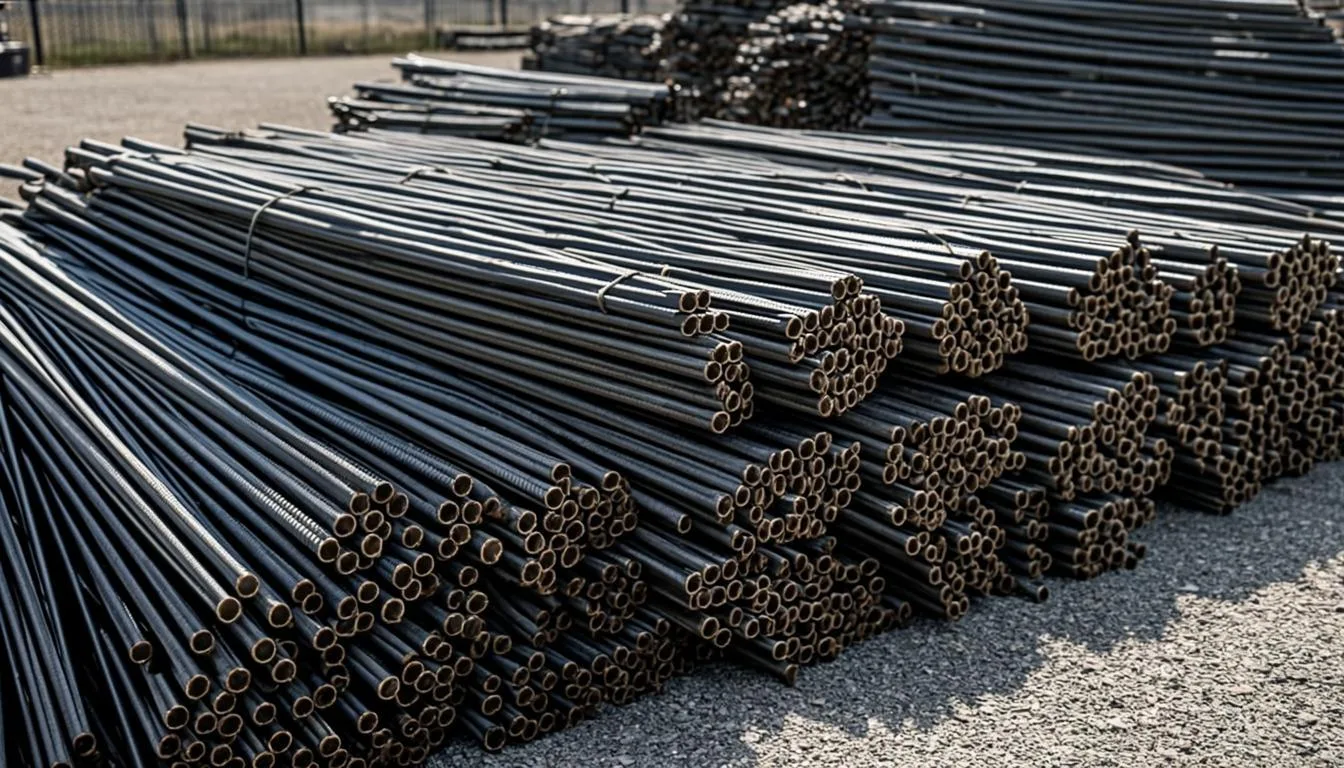
Steel is the single most expensive line in your grey structure — and the one where buyers lose the most money through guesswork: wrong weight calculations, unweighed trolleys, or buying the wrong grade. This guide gives you 2026 sariya rates, the exact weight formula with worked examples, and realistic steel tonnage for every house size — the same numbers we buy and sell at daily at Khokhar Traders Jhelum.
Sariya Rates in Pakistan (2026)
Rates below are typical delivered-yard prices per ton; brands like Mughal, Ittefaq, Amreli, FF and FAHID move within this band:
| Size | Diameter | Weight (kg/m) | Per Ton (PKR) | ~Per KG (PKR) |
|---|---|---|---|---|
| 3 sutar | 9.5 – 10 mm | 0.62 | 255,000 – 268,000 | 255 – 268 |
| 4 sutar | 12 mm | 0.89 | 252,000 – 265,000 | 252 – 265 |
| 5 sutar | 16 mm | 1.58 | 250,000 – 262,000 | 250 – 262 |
| 6 sutar | 19 – 20 mm | 2.47 | 250,000 – 262,000 | 250 – 262 |
| 8 sutar | 25 mm | 3.85 | 250,000 – 262,000 | 250 – 262 |
Rates move daily with scrap prices and the rupee — for today's exact figure, call +92 331 5083 648 or see our Jhelum material price list.
The Only Formula You Need: D²/162
Weight per metre of any rebar = D² ÷ 162, where D is diameter in mm.
Example 1 — 4 sutar (12 mm): 12 × 12 = 144 → 144 ÷ 162 = 0.89 kg per metre → one 40-ft (12.2 m) piece weighs ~10.9 kg → one ton ≈ 92 pieces.
Example 2 — 5 sutar (16 mm): 16 × 16 = 256 → 256 ÷ 162 = 1.58 kg per metre → one 40-ft piece ~19.3 kg → one ton ≈ 52 pieces.
How to use it on site: count the pieces in a trolley, multiply by per-piece weight from the formula, and you know the tonnage before the weighbridge does. If the weighbridge disagrees by more than 2%, something is wrong — check who is holding the receipt.
Grade 40 vs Grade 60 — Which Should You Buy?
| Grade 40 | Grade 60 | |
|---|---|---|
| Yield strength | 280 MPa | 420 MPa |
| Typical use | Old practice, ties, light work | All house RCC today |
| Steel quantity needed | More tons for same strength | 15–20% less steel |
| Price | Slightly cheaper per ton | Standard for slabs/columns |
Grade 60 is the current standard for house slabs, columns and beams in Pakistan — the small per-ton premium is cheaper than buying extra tons of Grade 40. We explain bar markings and bundle tags in the steel grades buying guide.
How Much Steel Does Your House Need?
| House Size | Covered Area | Steel (Grade-60) |
|---|---|---|
| 3 marla | 700 – 850 sq ft | 1.6 – 2.0 tons |
| 5 marla | 1,400 – 1,800 sq ft | 3.5 – 4.5 tons |
| 10 marla | 3,000 – 3,400 sq ft | 6.5 – 8.0 tons |
| 1 kanal | 5,500 – 6,500 sq ft | 12 – 15 tons |
These cover the full double-story grey structure. Rough split: slabs take ~45%, columns and beams ~40%, footings and misc ~15%. For an exact count bar by bar, use the free steel calculator — and for the whole-house picture see the 10 marla construction cost breakdown.
5 Rules That Save You Money on Steel
- Witness the weighbridge — every trolley, every time. The difference between billed and actual weight is where "discounts" get stolen back.
- Check the grade marking on every bar — genuine Grade-60 bars carry the mill's grade stamp and a clear rib pattern; check bundle tags before unloading.
- Buy one brand for one pour — mixing brands mixes mill tolerances; consistency keeps your bends and laps predictable.
- Store off the ground — sleepers under bundles; mud-rusted bars lose bond strength and weight.
- Buy the whole project's steel in one or two lots — tonnage buyers get rates per-ton buyers' quotes can't match, and you lock the rate before the next increase.
Order Steel for Your Project Today
Khokhar Traders stocks Grade 60 and Grade 40 sariya in all standard sizes (3–8 sutar), delivered to your site across Jhelum city and nearby areas — and yes, you can watch the weighbridge. Call or WhatsApp +92 331 5083 648 for today's per-ton rate, or contact us with your bar schedule for a full-package quote.
Saria Mistakes We See Every Week
Steel is the least forgiving material on a site — once it is inside a slab, nobody is pulling it out to fix a decision. These are the mistakes that walk into our yard most often:
- Mixing grades at random. Grade 60 is the standard for slabs and beams in new Pakistani construction; Grade 40 still does honest work on lintels and ties. The mistake is not choosing one or the other — it is letting whatever is on the trolley that morning end up in the slab. Your structural drawings assign grades; keep the piles separate and labelled.
- Buying everything at once. Steel rusts, and a six-month pile in the monsoon is not the bar you paid for. Buy by construction stage — foundation, then columns, then slab — and store what you do have on brick sleepers off the ground, covered.
- Forgetting laps, chairs and wastage. A slab schedule that counts only net bar length runs short. Cutting waste, laps and chair bars routinely add a few percent — plan for it rather than pausing a pour to hunt for two more bundles.
- Judging quality by flexing the bar. A quick bend test tells you something, but yield strength is not visible. Buy from stock that arrives with consistent branding per length, and keep one grade per element.
- Confusing weight with strength. The weight of a sutar bar is fixed by its diameter — that is what the D²/162 rule and our steel calculator work out. Grade changes strength, not weight, so a confident-sounding ring from a bend test does not mean a stronger bar.
Take your bar bending schedule to your engineer before ordering, and we will match the supply to it — grade by grade, stage by stage.
Questions about your own build? Call or WhatsApp +92 331 5083 648 — we answer with today's facts, not guesses.
Delivery Areas & Charges
Plain and simple — here is exactly how delivery works at Khokhar Traders.
Where we deliver: Locally within about 10–15 km of Jhelum city centre — Jhelum City, Civil Lines, Bilal Town, Kala Gujran, Haji Aima, Kotla Aima, Katchery, Mohamdi Chowk, Chishtian Mohallah, Madina Town, CITI Housing, and many more areas around Jhelum city centre. A little further out? We may still be able to deliver with extra charges — just ask.
Delivery charges: Agreed at the time of order. Share your location with our team and we calculate the exact distance, then confirm a fair delivery charge before anything is loaded. Prefer to save on transport? You are welcome to arrange your own transport.
Ex-shop rates vs delivered rates: Shop materials — cement, iron rebars (sariya), chips, tile bonds, paints, hardware — are priced at ex-shop rates: either we deliver at the agreed charge, or you arrange your own transport. Loose materials — sand, aggregate (crush), soil and gassu for foundation filling, and bricks on a full trolley — usually come with delivery included.
Full-truck cement delivery: We can deliver a full truck of 350–500 cement bags straight to your site (if a bigger truck can safely reach it). A small loader carries only 25–35 bags per trip — one full truck saves you many loader runs and real money on local transport.
Rates change daily: A rate confirmed over the phone is valid for that time of day only. A rate is locked with an official order and advance payment — we confirm the final rate and delivery charge together before dispatch.
Full details in our Shipping Policy — or call / WhatsApp +92 331 5083 648 and we will confirm today's rate and your delivery charge in minutes.
Good to Know Before You Act
Two honest notes about everything published in our guides.
Rates are market estimates and they change daily: any price or rate mentioned in our guides is an indicative market estimate for planning only — material rates in Pakistan fluctuate, sometimes daily. It does not matter what a guide, blog or old quotation says — the final and correct rate is always the one our team confirms with you on the day. Call or WhatsApp +92 331 5083 648 for today's exact price. A rate is locked only with an official order and advance payment.
No warranty on results — always speak to a professional first: quantities, mix ratios, material suggestions and methods described in our guides are general educational guidance, not instructions for your specific site. Results after mixing or using any material in any ratio depend on site conditions, water quality, handling, curing, storage and workmanship — we do not warrant or guarantee any result arising from following general guidance. Before you act, always speak with your engineer, contractor or a qualified professional — or ask our team for guidance on materials.
Planning a stage of your project? Contact us first — we will gladly go through your material list, today's rates and the right products for your site before you buy.
Related Articles
Tile Bond vs Cement Mortar for Fixing Tiles — What Actually Holds
Why floor tiles sound hollow within a year, when ordinary cement mortar is fine, when a proper tile adhesive earns its keep, and how far one 20kg bag of tile bond really goes.
White Cement in Pakistan — 7 Everyday Uses We See From Our Counter
Maple Leaf white cement is not just for masons — grout lines, crack filling, elevation borders, pots and crafts. Where white cement beats wall putty, where putty wins, and how to apply it so it stays white.
How Long Does a Cement Bag Last? Shelf Life, Storage & Quick Checks
A cement bag is not wine — it does not improve with age. Why cement loses strength in humid storage, how to read the packing date, four quick checks before you accept a bag, and how fresh stock should be handled.