How Long Does a Cement Bag Last? Shelf Life, Storage & Quick Checks
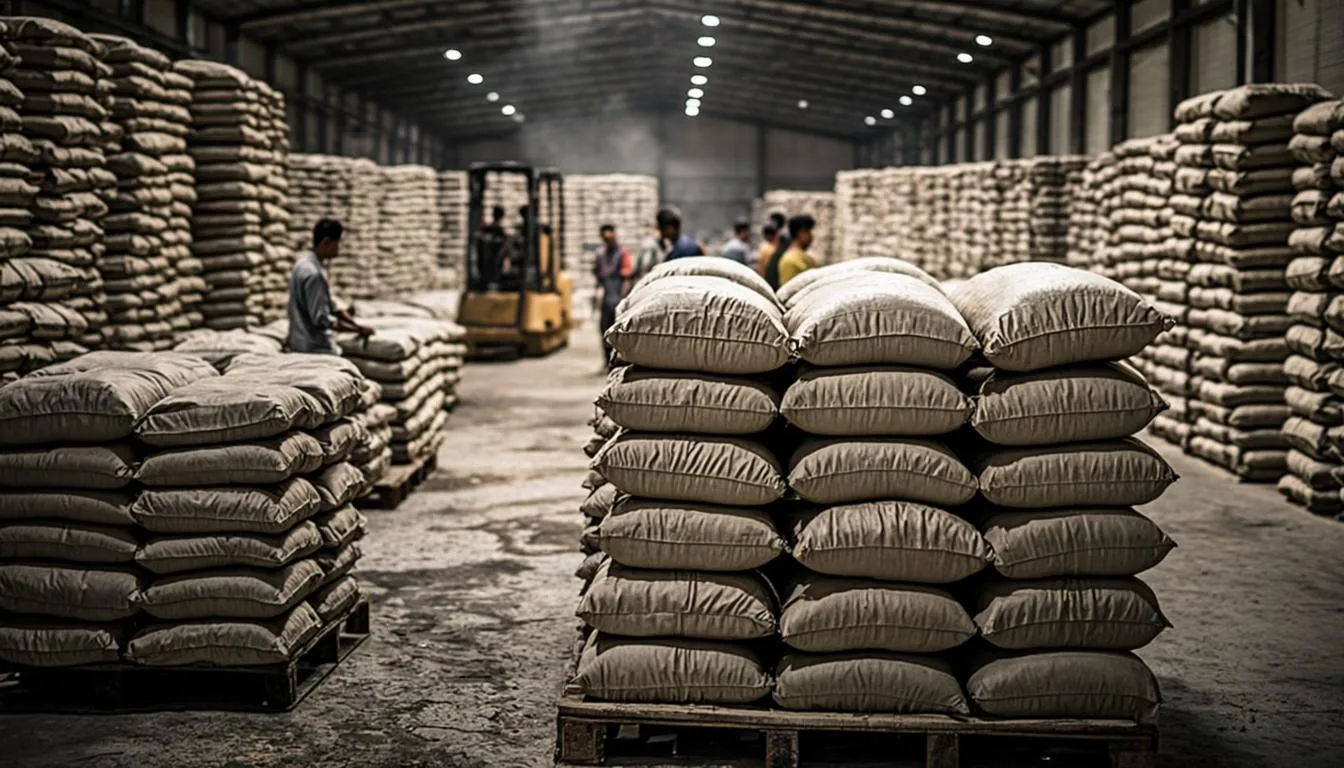
One April morning, a customer carried a half-used cement bag into our shop — one he had bought from us in December. It had gone hard in the middle, like a rock wearing a soft paper shell. He wanted to know if it was our fault, the bag's fault, or his. Honest answer: nobody's, really. Cement does that. It is not wine; it does not get better in storage.
This guide covers what every homeowner and site in-charge should know: how long a cement bag actually stays good, why Jhelum's weather makes the answer shorter than the calendar suggests, four checks you can do in under a minute before accepting any delivery, and how to store bags so the last bag on the stack is as usable as the first.
The Short Answer
Most cement manufacturers in Pakistan advise using bagged cement within about three months of the packing date for structural work — slabs, columns, beams. Some will stretch that for non-structural jobs like bedding and small repairs if the bags were stored well. But treat three months as the honest planning number.
And here is the part most people miss: that clock runs faster in humid weather. Cement is hygroscopic — it pulls moisture out of the air and starts reacting with it, bag sealed or not. A bag that sits through our monsoon in a damp storeroom loses usable strength faster than the same bag would in May.
Why Cement "Expires" At All
Inside every bag, cement is a finely ground powder just waiting for water. Add water and it hydrates — that is how it becomes concrete. The problem is that humid air is water, slowly delivered. Every week in humid storage, a thin layer of hydration happens on countless particles. The result:
- Strength drops — the bag may look fine but the binder is part-spent.
- Lumps form — early hydration glues particles together.
- Setting behaviour turns odd — stale cement can set erratically or weakly.
This is exactly why we ask every customer when their pour is planned before quoting — a bag bought for a slab next week should be a different bag, from a different lot, than one for a repair next month. Our cement guide explains how we handle stock and rates day to day.
How to Read the Packing Date
Every genuine bag carries a packing/manufacturing date stamped or printed on it — usually near the valve or on the side panel. Before you accept any delivery, for any brand — Cherat, Fecto, Flying Pakistan, Bestway — glance at the date. Fresh stock shows dates within the last few weeks. If a supplier hesitates when you ask about dates, that tells you something too.
Four Quick Checks Before You Accept a Bag
These take a minute and need no tools:
- The squeeze test. A fresh bag feels soft with a slight give, like a pillow of powder. A stale bag resists — the corners go first, then the middle hardens.
- The lump test. Press your hand into the bag through the valve. Fresh cement flows like dry sand. Hard lumps that crumble only under real pressure mean moisture has been at work.
- The float test. Drop a pinch of cement into a bucket of water. Fresh cement floats on the surface for a few seconds before sinking. Stale cement — already partly hydrated — clumps and drops quickly. Any mason can show you this one.
- The seal test. The valve should be factory-sealed and intact. Re-stitched or re-glued valve bottoms are how old or re-bagged stock gets passed off as fresh. Only accept factory-sealed bags.
One more thing worth saying: these are field checks, not lab tests. For any structural decision — what goes into a slab or column — your engineer's advice comes first, always.
Storage That Actually Works
Good storage buys you time; bad storage burns it. What works in our climate:
- Off the ground, always. Pallets, sleepers or a plastic sheet — never bare floor. Ground moisture climbs straight into the bottom course.
- Away from walls. Leave a hand's width so air can move behind the stack.
- Cover the stack. In monsoon, tarpaulin over the pile, windows shut in the store room. A stack that catches one good roof leak is a stack you will chip apart with a shovel.
- Do not stack too high. Around 10 bags is sensible. The bottom bags under a 15-bag tower compact and cake.
- First in, first out. Use the older lot before the newer one — the way a proper shop rotates its own shelves.
- An opened bag is a same-day bag. Once air gets in, the countdown runs in days, not months.
How We Keep Stock Fresh at Our Yard
We buy shop stock in smaller, more frequent lots rather than parking pallets for months — that is how the last bag on the shelf stays within date. For big pours, the practical route is different anyway: order against your pour date and we arrange a full-truck lot of 350–500 bags delivered straight to your site, fresh from the factory cycle. That way cement never sits anywhere longer than it needs to — not at our yard, and not at yours.
If your slab date is coming up, send it to us on WhatsApp +92 331 5083 648 with your bag count (our free cement calculator works that out in a minute) and we will have fresh, in-date bags ready for the morning of the pour.
Delivery Areas & Charges
Plain and simple — here is exactly how delivery works at Khokhar Traders.
Where we deliver: Locally within about 10–15 km of Jhelum city centre — Jhelum City, Civil Lines, Bilal Town, Kala Gujran, Haji Aima, Kotla Aima, Katchery, Mohamdi Chowk, Chishtian Mohallah, Madina Town, CITI Housing, and many more areas around Jhelum city centre. A little further out? We may still be able to deliver with extra charges — just ask.
Delivery charges: Agreed at the time of order. Share your location with our team and we calculate the exact distance, then confirm a fair delivery charge before anything is loaded. Prefer to save on transport? You are welcome to arrange your own transport.
Ex-shop rates vs delivered rates: Shop materials — cement, iron rebars (sariya), chips, tile bonds, paints, hardware — are priced at ex-shop rates: either we deliver at the agreed charge, or you arrange your own transport. Loose materials — sand, aggregate (crush), soil and gassu for foundation filling, and bricks on a full trolley — usually come with delivery included.
Full-truck cement delivery: We can deliver a full truck of 350–500 cement bags straight to your site (if a bigger truck can safely reach it). A small loader carries only 25–35 bags per trip — one full truck saves you many loader runs and real money on local transport.
Rates change daily: A rate confirmed over the phone is valid for that time of day only. A rate is locked with an official order and advance payment — we confirm the final rate and delivery charge together before dispatch.
Full details in our Shipping Policy — or call / WhatsApp +92 331 5083 648 and we will confirm today's rate and your delivery charge in minutes.
Good to Know Before You Act
Two honest notes about everything published in our guides.
Rates are market estimates and they change daily: any price or rate mentioned in our guides is an indicative market estimate for planning only — material rates in Pakistan fluctuate, sometimes daily. It does not matter what a guide, blog or old quotation says — the final and correct rate is always the one our team confirms with you on the day. Call or WhatsApp +92 331 5083 648 for today's exact price. A rate is locked only with an official order and advance payment.
No warranty on results — always speak to a professional first: quantities, mix ratios, material suggestions and methods described in our guides are general educational guidance, not instructions for your specific site. Results after mixing or using any material in any ratio depend on site conditions, water quality, handling, curing, storage and workmanship — we do not warrant or guarantee any result arising from following general guidance. Before you act, always speak with your engineer, contractor or a qualified professional — or ask our team for guidance on materials.
Planning a stage of your project? Contact us first — we will gladly go through your material list, today's rates and the right products for your site before you buy.
Related Articles
Tile Bond vs Cement Mortar for Fixing Tiles — What Actually Holds
Why floor tiles sound hollow within a year, when ordinary cement mortar is fine, when a proper tile adhesive earns its keep, and how far one 20kg bag of tile bond really goes.
White Cement in Pakistan — 7 Everyday Uses We See From Our Counter
Maple Leaf white cement is not just for masons — grout lines, crack filling, elevation borders, pots and crafts. Where white cement beats wall putty, where putty wins, and how to apply it so it stays white.
Steel (Sariya) Rate in Pakistan 2026 — Per Ton, Per KG + House Guide
Today's sariya rates in Pakistan for 2026: price per ton and per kg for 3 to 8 sutar bars, the D²/162 weight formula with worked examples, and how many tons a 3, 5, 10 marla or 1 kanal house needs.