Tile Bond vs Cement Mortar for Fixing Tiles — What Actually Holds
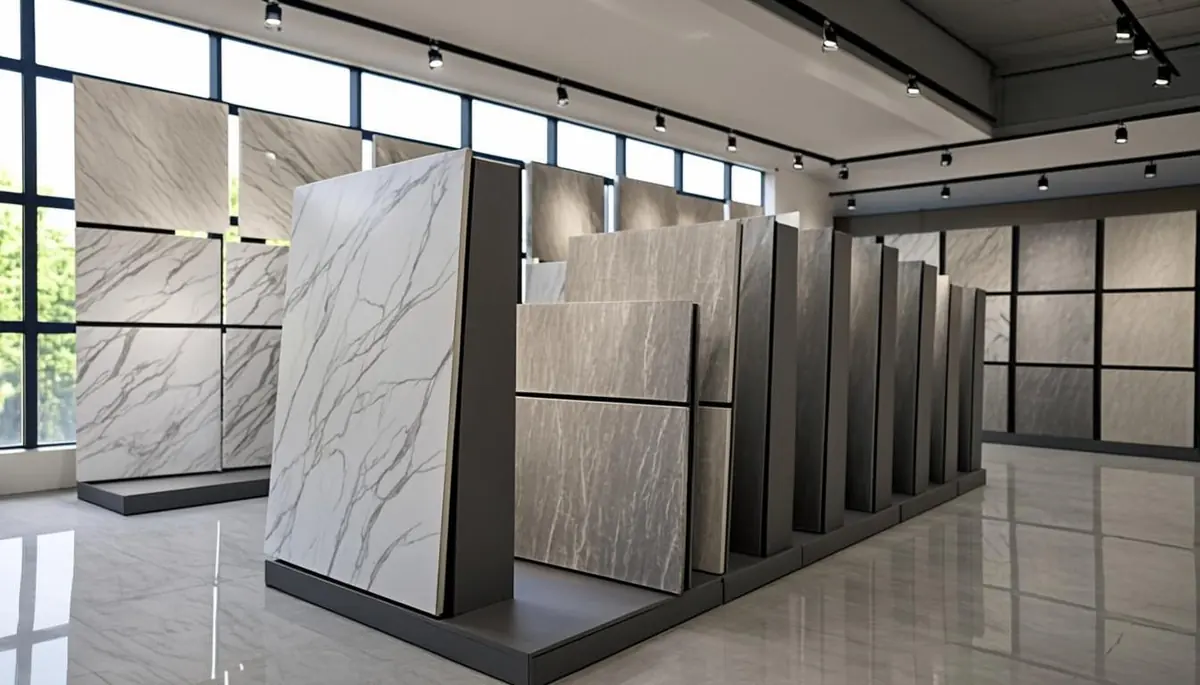
Last winter a customer walked in with his phone in his hand and a video on the screen: he was tapping a coin across his lounge floor, and every third tile answered with a hollow "khok" sound. Two tiles near the door had already popped a corner. His question was the one we hear all the time — "did I buy bad tiles, or is the fixer at fault?" Nine times out of ten, neither. The problem is the bed the tile was laid on.
This guide explains the difference between fixing tiles on ordinary cement mortar and fixing them with a proper tile bond (tile adhesive), where each method makes sense, and how much area one bag of tile bond covers. No jargon — just what we tell customers at our counter on Karimpura Road, Jhelum.
Why Tiles Go Hollow in the First Place
A tile stays stuck when the full back of it is bonded to the floor or wall with no gaps underneath. Hollow spots start when that bond is incomplete:
- A slurry skin that dried too early. Traditional practice is to sprinkle neat cement slurry over the mortar bed, then lay the tile. On a hot Jhelum afternoon, that slurry can skin over in minutes — the tile sits on a dry crust instead of a wet bond.
- Spot dabbing. Some fixers put dabs of mortar under a tile to make levelling easy. Dabs leave big empty pockets between them. One knock later, the pocket cracks.
- A thirsty surface. Fresh plaster or concrete sucks water out of the bond within seconds. Dry surface, weak bond.
- No movement allowance. Big sun-exposed floors expand and contract. A rigid, thick mortar bed with no flexible adhesive layer eventually lets go at the corners.
Hollow-sounding tiles are not a defect on day one — they are a promise of a cracked tile later. Water gets into those pockets, winter frost and summer heat push, and the corner lifts.
What Tile Bond Actually Is
Tile bond — the bags marked tile adhesive — is a factory-blended, polymer-modified cement powder. You only add water. The polymers inside do three things ordinary cement cannot:
- They hold water in the bond long enough for cement to hydrate properly, even on hot, thirsty surfaces.
- They flex a little. Small movement from heat or footfall does not snap the bond.
- They grip smooth, low-porosity tiles — vitrified, porcelain and glazed backs — that plain cement slurry struggles to bite into.
That is also why tile bond is applied in a thin, even layer (usually 3–4 mm, combed with a notched trowel) instead of a thick bed. Thin bed, full contact, no voids.
Where Ordinary Cement Mortar Is Still Fine
We sell tile bond, but we will not tell you that every floor needs it. A good fixer laying standard-size ceramic floor tiles on a fresh, level screed — with a proper wet slurry coat and tiles pressed in fully — has been getting decent results in Jhelum homes for decades. Thick-bed mortar is forgiving on slightly uneven floors and it costs less per square foot.
Where mortar-only struggles:
- Wall tiles (they hang — gravity fights a weak bond)
- Big-format tiles (less mortar contact, more hollow pockets)
- Vitrified and porcelain tiles (smooth, low-porosity backs)
- Wet areas — kitchen splash zones, bathroom walls, rooftop walkways
- Tiling over old concrete or existing screeds where a thick bed would raise the floor level
For those, tile bond is not a luxury. It is the difference between a floor you tap proudly and a floor that answers "khok".
Happilac Tile Bond — 20kg and 40kg Bags
We stock Happilac tile bond in 20kg and 40kg bags at our materials yard. A rough planning number for coverage:
| Bag | Typical Coverage at 3–4 mm Bed |
|---|---|
| 20kg | roughly 35–50 sq ft |
| 40kg | roughly 70–100 sq ft |
Big-format tiles, irregular tile backs and generous beds eat more. Buy for one room at a time rather than guessing for the whole house — leftover adhesive bags, once opened, do not keep well.
One honest note: tile bond is a shop-stocked item for us, so it is sold at ex-shop rate — see our delivery policy for how shop items and site-delivered materials differ.
How a Fixer Should Use It
If your tiler has never worked with adhesive, share these five points with him — they come straight from the questions we get at the counter:
- Mix to toothpaste thickness — clean water, no lumps, rest 5 minutes, mix again. Do not add extra water to a stiffening mix.
- Comb the bed. Spread with a notched trowel so ridges form. The ridges collapse as the tile presses in — that is full contact.
- Back-butter big tiles. Spread a thin layer on the tile back too, especially anything above 2x2 ft.
- Work in small areas. Lay tiles within 10–15 minutes of spreading, before the adhesive skins.
- Never re-temper. Adhesive that has started setting is done. Adding water to revive it weakens the bond — throw it away.
Grout the joints only after the bond has cured — normally next day. And before final payment, tap a few tiles yourself with a coin. Solid tiles sound flat and dull. Hollow ones ring. Every tiler knows this test; a good one will not mind you doing it.
Talk to Us Before You Buy
Tile sizes, the room, the surface underneath and the fixer's habits all change what you should buy — so tell us what you are tiling and roughly how many square feet, and we will tell you how many bags make sense. Call or WhatsApp +92 331 5083 648, or send us your room list through the contact page and we will work the quantity out with you.
Delivery Areas & Charges
Plain and simple — here is exactly how delivery works at Khokhar Traders.
Where we deliver: Locally within about 10–15 km of Jhelum city centre — Jhelum City, Civil Lines, Bilal Town, Kala Gujran, Haji Aima, Kotla Aima, Katchery, Mohamdi Chowk, Chishtian Mohallah, Madina Town, CITI Housing, and many more areas around Jhelum city centre. A little further out? We may still be able to deliver with extra charges — just ask.
Delivery charges: Agreed at the time of order. Share your location with our team and we calculate the exact distance, then confirm a fair delivery charge before anything is loaded. Prefer to save on transport? You are welcome to arrange your own transport.
Ex-shop rates vs delivered rates: Shop materials — cement, iron rebars (sariya), chips, tile bonds, paints, hardware — are priced at ex-shop rates: either we deliver at the agreed charge, or you arrange your own transport. Loose materials — sand, aggregate (crush), soil and gassu for foundation filling, and bricks on a full trolley — usually come with delivery included.
Full-truck cement delivery: We can deliver a full truck of 350–500 cement bags straight to your site (if a bigger truck can safely reach it). A small loader carries only 25–35 bags per trip — one full truck saves you many loader runs and real money on local transport.
Rates change daily: A rate confirmed over the phone is valid for that time of day only. A rate is locked with an official order and advance payment — we confirm the final rate and delivery charge together before dispatch.
Full details in our Shipping Policy — or call / WhatsApp +92 331 5083 648 and we will confirm today's rate and your delivery charge in minutes.
Good to Know Before You Act
Two honest notes about everything published in our guides.
Rates are market estimates and they change daily: any price or rate mentioned in our guides is an indicative market estimate for planning only — material rates in Pakistan fluctuate, sometimes daily. It does not matter what a guide, blog or old quotation says — the final and correct rate is always the one our team confirms with you on the day. Call or WhatsApp +92 331 5083 648 for today's exact price. A rate is locked only with an official order and advance payment.
No warranty on results — always speak to a professional first: quantities, mix ratios, material suggestions and methods described in our guides are general educational guidance, not instructions for your specific site. Results after mixing or using any material in any ratio depend on site conditions, water quality, handling, curing, storage and workmanship — we do not warrant or guarantee any result arising from following general guidance. Before you act, always speak with your engineer, contractor or a qualified professional — or ask our team for guidance on materials.
Planning a stage of your project? Contact us first — we will gladly go through your material list, today's rates and the right products for your site before you buy.
Related Articles
White Cement in Pakistan — 7 Everyday Uses We See From Our Counter
Maple Leaf white cement is not just for masons — grout lines, crack filling, elevation borders, pots and crafts. Where white cement beats wall putty, where putty wins, and how to apply it so it stays white.
How Long Does a Cement Bag Last? Shelf Life, Storage & Quick Checks
A cement bag is not wine — it does not improve with age. Why cement loses strength in humid storage, how to read the packing date, four quick checks before you accept a bag, and how fresh stock should be handled.
Steel (Sariya) Rate in Pakistan 2026 — Per Ton, Per KG + House Guide
Today's sariya rates in Pakistan for 2026: price per ton and per kg for 3 to 8 sutar bars, the D²/162 weight formula with worked examples, and how many tons a 3, 5, 10 marla or 1 kanal house needs.