Lanter (Lintel) Beams and Porch Roofs: Cement, Saria and Cracks You Can Avoid
Lanter (Lintel) Beams and Porch Roofs: Cement, Saria and Cracks You Can Avoid
A photo came in on WhatsApp last winter: a crack, two winters old, running diagonally from the top corner of a door. The owner wanted to know if his foundation was failing. It was not — the mason had bridged the door opening with brick courses alone and skipped a proper lanter. One beam, a few bags of cement and a few saria pieces, and that crack never happens. This post is about that beam, and about porch roofs, where the same family of mistakes shows up bigger.
What a lanter actually does
A lanter (you will also hear linter or lintel) is the concrete beam cast over every door, window and verandah opening. The wall above the opening presses down; the lanter carries that load across the gap and spreads it into the wall on both sides. No lanter, and the brick courses over the opening sag and crack — usually in their first or second winter.
Every opening gets one, even small ones. The lintel is cast with the wall — shuttering under the opening, saria in it, concrete poured, cured, then the wall continues above.
Best cement for a lanter?
For RCC casting work like lintels, OPC 53 is the usual choice around Jhelum — it gains strength early, which matters for a beam that gets loaded as soon as the wall continues. PPC also does the job with proper curing and a little patience in cold weather. Which one goes in is the engineer's call, not the counter's.
What we stock and what the local trade asks for: Cherat, Fecto, Flying Pakistan and Bestway for the grey work, with Maple Leaf White Cement for finishing touches. All bag cement rates move daily, so we do not print them — call +92 331 5083 648 when the lanter date is fixed.
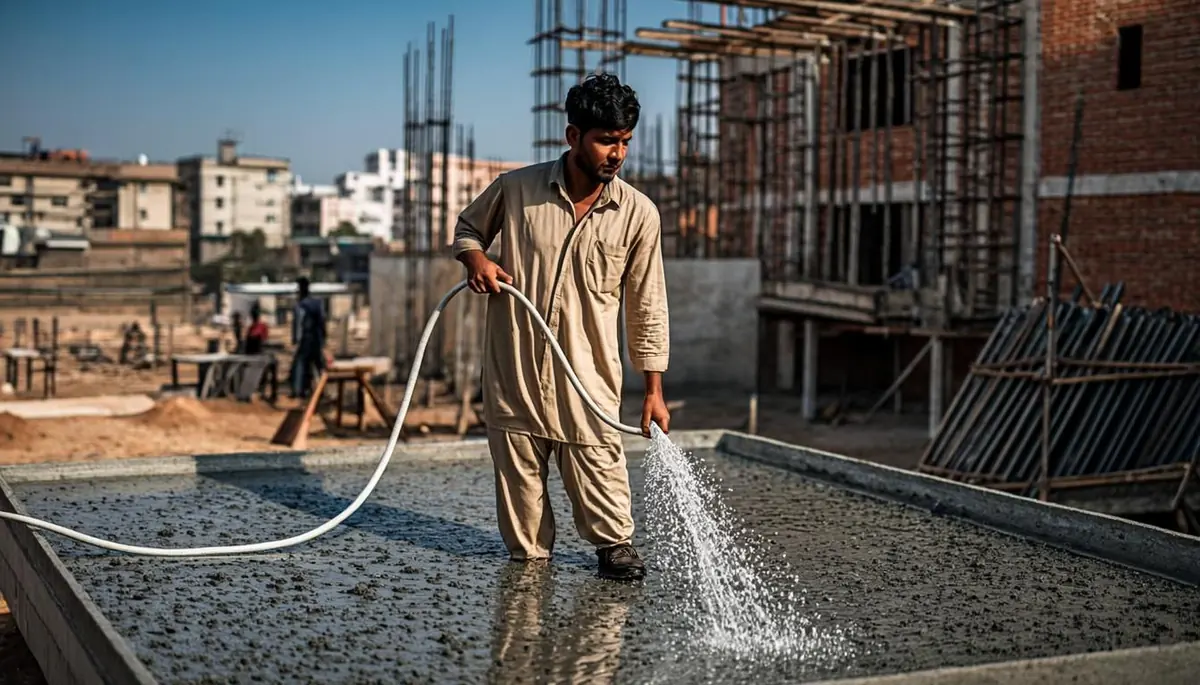
The part that matters more than the brand: curing. Keep the shuttering up for at least a week (longer in cold months) and keep the beam wet for 7 to 14 days. A dry-cured lanter is half the beam it should have been.
Saria in a lanter
The drawing decides — bar sizes, spacing and bearing length come from your engineer, and for larger openings they absolutely must. What we most often see supplied for small door and window lintels around Jhelum: 3 and 4 sutar bars for rings/stirrups, 4 and 5 sutar for the main bars, in Grade 60 steel. The two bars along the bottom take the bending; the rings hold the cage square while it is poured.
If you want to check any of this by weight, our sariya weight chart lists every size from 3 to 8 sutar in kg per foot, and the steel grades guide explains Grade 60 vs Grade 40 in plain words.
Porch roofs: the three local options
- RCC slab porch — the modern default: two to four columns, a thin slab, sloped to a spout. Strong, permanent, and it can carry a room above later. Costs the most shuttering and curing time.
- T-iron (girder) roof — steel girders span wall to wall with sheets or brick-bat panels between. Older style, fast to erect, easy to extend, still the right answer for some verandahs and store areas.
- Wooden or steel-frame shade roof — light structures for car stands and sitting areas. Fast and light, but temporary in nature.
Whichever option, two things decide whether the porch lasts: the slope (water must walk to a spout, never stand) and the waterproof topping on the slab where it meets the house wall.
The mistake we see most
A new porch slab tied rigidly into the old house structure. The old house has finished settling; the new columns and slab are just starting to. Winter and summer move them differently — so the joint between old and new works like a hinge and cracks everything around it. A movement joint at that meeting line is cheap on day one and impossible after.
The second porch killer: columns on fresh filled earth. Fill settles; a column footing poured on loose fill goes down with it. Compact the fill properly and give the footing its full curing time before loading.
Porch builders near me — and what we take on
Khokhar Traders builds grey structure around Jhelum — by labour rate or with full material — and porches are some of our favourite jobs because they are small enough to finish properly: room additions, porch roofs, godowns and warehouse slabs. We work within roughly the local Jhelum area of Jhelum city, and the first conversation is simple: send photos and rough sizes on WhatsApp, and we will tell you what the job involves. For builders jobs the terms are agreed in writing before work starts — read how we approach it in the builders guide.
Openings, beams and porch slabs are structural work. Use this guide to understand the vocabulary and spot the common mistakes — then let your engineer or contractor size every lanter and column from your actual drawings. When the date is set, call us for today's cement and sariya rates and we will have the material on site on time.
Ordering & Rates — Confirmed on Call
Material rates change daily, so we confirm everything directly with you.
Today's rate, not yesterday's: Cement, steel, bricks, sand, crush and paint rates move with the market, sometimes daily. Call or WhatsApp +92 331 5083 648 and our team confirms the day's exact figure for your brand and quantity in minutes.
Straight, itemised quotes: Tell us your material list — a paper chit, a photo of your plan or just your plot size and stage. You get brand, grade and quantity spelled out, and the figure is locked only with an official order and advance payment.
Everything confirmed personally: Availability, quantities, timing and how the material reaches you — we confirm all of it with you directly before anything is finalised. No surprises at loading.
Full details in our Contact page — or call / WhatsApp +92 331 5083 648 and we will go through your list and today's rate in minutes.
Good to Know Before You Act
Two honest notes about everything published in our guides.
We don't publish fixed rates: material rates in Pakistan change daily, so nothing on this site is a price list. The final and correct rate is always the one our team confirms with you on the day. Call or WhatsApp +92 331 5083 648 for today's exact figure — a rate is locked only with an official order and advance payment.
Guidance, not instructions: quantities, mix ratios and methods described in our guides are general educational guidance for your specific site you should verify — outcomes depend on site conditions, water quality, handling, curing, storage and workmanship. Before you act, always speak with your engineer, contractor or a qualified professional — or ask our team for guidance on materials.
Planning a stage of your project? Contact us first — we will gladly go through your material list, today's rate and the right products for your site before you buy.
Related Articles
Grey Structure Cost of a 5 Marla House (2026): Full Breakdown
Two quotes, miles apart, one missing half its scope. What a 5 marla grey structure includes, the material quantities behind it for single and double story, and where quotes go wrong.
Best Month to Start House Construction in Pakistan — A Jhelum Answer
There is no magic month, but there are smart ones. How monsoon, winter and peak season change foundations, curing, mistri availability and material rates — and the two windows local builders actually aim for.
10 Marla House Construction Cost in Pakistan (2026) — Full Breakdown
What a 10 marla house really costs in 2026: grey structure quantities (bricks, cement, steel, sand, crush), labour rates, finishing costs and realistic total budgets from economy to premium.