10 Mistakes to Avoid When Buying Building Materials in Pakistan (2026)
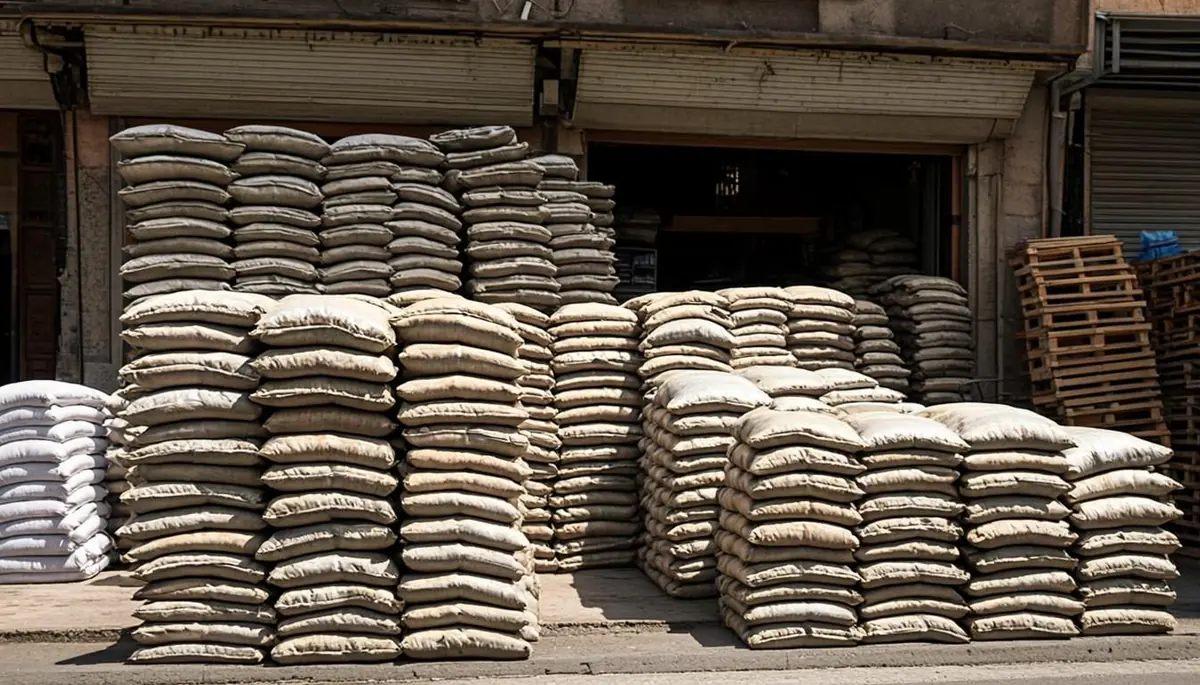
Ask any family that finished a house what they would do differently, and the answers are rarely about which brand they picked. They are about how the material was bought, checked and stored. The expensive losses never appear on a receipt — they appear months later as weak plaster, hollow-sounding slabs and steel that was never quite the weight the chit promised.
This guide collects the ten mistakes we see most often at our Jhelum materials yard — and the five-minute checks that catch each one. None of them need a laboratory. All of them need someone willing to ask questions before the trolley unloads.
Mistake 1 — Buying Everything at Once
The enthusiasm is understandable: get the whole list in one trip, one negotiation, done. But a house consumes material in stages, and everything that sits in storage is quietly degrading. Cement loses strength with every humid week, bricks absorb damp and grow moss, steel picks up surface rust that slows down your mistri.
Do this instead: buy stage-wise — foundation, then plinth, then structure, then finishing — and let each stage's consumption decide the next order. The full stage-by-stage list lives in our building materials list for a 5 marla house.
Mistake 2 — Storing Cement Like Sacks of Rice
Cement is not dry goods; it is a chemical with a shelf life. Bags stacked directly on soil, against damp walls or under a leaking tarpaulin can set into lumps before they ever reach the mixer.
Do this instead: raise the stack on a wooden pallet or dry brick platform, keep it away from walls, cover it with plastic, and use oldest stock first. If a bag has hard lumps that do not crumble by hand, it is already compromised. How long cement actually lasts — and how to read the manufacturing date on the bag — is explained in our cement shelf-life guide.
Mistake 3 — Judging Bricks by Colour Alone
A deep red brick looks strong, and a pale one looks weak — colour is about soil and kiln, not strength. The real tests are simpler and more honest: strike two bricks together (a clear metallic ring means proper burning; a dull thud means under-burnt), check for uniform shape, and try scratching the surface — a sharp brick that barely scars is fired right.
Do this instead: learn the grades before the trolley arrives. Our brick types guide (awwal, doem & fly ash) walks through what each grade is actually for.
Mistake 4 — Accepting Sand Without the Bottle Test
Half the cracked plaster in Punjab traces back to dirty sand. Silt and mud coat every grain and weaken the cement bond — and you cannot see the difference by looking at a heap.
Do this instead: fill a clear bottle one-third with sand, top up with water, shake hard, and let it settle for 30 minutes. The silt layer sitting on top of the sand tells you everything. If it is thicker than roughly a tenth of the sand layer, reject the load or demand a price cut. The full test, plus the difference between Chenab and Ravi sand, is in our sand guide for construction.
Mistake 5 — Ignoring Crush Grading and Dust
Aggregate is the skeleton of your slab. Dust-coated crush and flaky, needle-shaped stone both weaken concrete no matter how much cement you add.
Do this instead: drop a handful from waist height — a small puff is normal, a lingering dust cloud is not. Look for a spread of sizes down to grit, not one uniform size. Sizes, sources and the Margalla-vs-Sargodha question are covered in our crush (bajri) guide.
Mistake 6 — Trusting the Chit Instead of the Weighbridge
Steel is sold by weight, and weight is where careless buyers lose the most. A bar stamped 12 mm may measure 11 mm — and the strength loss is bigger than the number suggests.
Do this instead: carry a simple vernier calliper, check the stamping on every bundle, and insist on witnessing the weighbridge for full trolleys. What each sutar size should weigh — with the D²/162 formula worked out — is in our saria weight-per-foot chart, and grade markings are explained in our steel grades guide.
Mistake 7 — Mixing Cement Brands Mid-Stage
Bags are bags, until mortar from two different cements sets at different rates in the same wall. Brand consistency is not brand loyalty — it is predictability in your mason's work.
Do this instead: pick one OPC 53 brand for structure and stick with it for the stage. Our cement brands comparison explains which brands suit which job.
Mistake 8 — Buying Without a Written List
Walking into a yard with a rough idea and leaving with whatever was stacked nearest the gate is how houses end up short on the slab day and heavy on the plaster stage.
Do this instead: make the list first — brands, grades, quantities per stage. Our free construction calculators turn your plot size and storeys into brick, cement, steel, sand and crush quantities in minutes. Then get in touch for more details and we will match the list, item by item, against what is actually in stock that day.
Mistake 9 — Settling Everything in Advance
Full advance payment removes your only leverage: the inspection. Once the money is gone, the motivation to fix a short load or a wrong grade is gone with it.
Do this instead: link payments to stages and inspections. Count the bags on your side, watch the bricks stack, check the bar branding — with the supplier, not after the trolley leaves. It is a small discipline that removes most disputes before they exist.
Mistake 10 — Budgeting on Last Month's Numbers
Material rates in Pakistan move daily with fuel prices, kiln rates and demand. A rate noted from a website or a cousin's build is history by the time you order — and budgets built on stale numbers break exactly when the slab is due.
Do this instead: confirm every figure on the day you order. Call or WhatsApp +92 331 5083 648 with your list — we spell out the rate for each brand and quantity, and it is locked only with an official order and advance payment. Nothing on this site is a price list by design; the correct figure is always the one confirmed with you directly.
The Five-Minute Buying Checklist
| Check | What good looks like |
|---|---|
| Cement bags | Factory-sealed, recent manufacturing date, no hard lumps, stored off the ground |
| Bricks | Metallic ring when struck, uniform shape, minimal scratch damage |
| Sand | Bottle test shows a thin silt layer; level measure, not heaped |
| Crush | Low dust cloud, spread of sizes, hard angular stone |
| Steel | Correct stamping, calliper-verified diameter, weighbridge witnessed |
| Order | Written list, stage-wise quantities, rate confirmed on the day |
Frequently Asked
What is the single biggest mistake buyers make? Buying on stale numbers — a rate from last month or another city. Material rates move daily, so confirm the current figure with us before you budget or order.
Do I need to test every material myself? No — but ask the supplier to run the checks in front of you. At our yard we expect the bottle test, the brick ring test and the weighbridge request; honest suppliers welcome them.
How early should I order before a slab? A few days is usually enough for cement, steel and crush if quantities are confirmed in advance. Call with your slab date and list and we will confirm availability for the day — get in touch for more details at +92 331 5083 648.
Buy Slower, Build Stronger
Every mistake above costs far more to fix later than to prevent now. Bring your list to the yard on Karimpura Road, Jhelum — or just send it on WhatsApp — and we will go through it line by line: brands, grades, quantities, and the checks worth doing when each load arrives.
Ordering & Rates — Confirmed on Call
Material rates change daily, so we confirm everything directly with you.
Today's rate, not yesterday's: Cement, steel, bricks, sand, crush and paint rates move with the market, sometimes daily. Call or WhatsApp +92 331 5083 648 and our team confirms the day's exact figure for your brand and quantity in minutes.
Straight, itemised quotes: Tell us your material list — a paper chit, a photo of your plan or just your plot size and stage. You get brand, grade and quantity spelled out, and the figure is locked only with an official order and advance payment.
Everything confirmed personally: Availability, quantities, timing and how the material reaches you — we confirm all of it with you directly before anything is finalised. No surprises at loading.
Full details in our Contact page — or call / WhatsApp +92 331 5083 648 and we will go through your list and today's rate in minutes.
Good to Know Before You Act
Two honest notes about everything published in our guides.
We don't publish fixed rates: material rates in Pakistan change daily, so nothing on this site is a price list. The final and correct rate is always the one our team confirms with you on the day. Call or WhatsApp +92 331 5083 648 for today's exact figure — a rate is locked only with an official order and advance payment.
Guidance, not instructions: quantities, mix ratios and methods described in our guides are general educational guidance for your specific site you should verify — outcomes depend on site conditions, water quality, handling, curing, storage and workmanship. Before you act, always speak with your engineer, contractor or a qualified professional — or ask our team for guidance on materials.
Planning a stage of your project? Contact us first — we will gladly go through your material list, today's rate and the right products for your site before you buy.
Related Articles
Building Materials List for a 5 Marla House (With Quantities)
The full 5 marla grey-structure material list in one place — bricks, cement, steel, sand and crush quantities, stage by stage, from the yard that supplies Jhelum daily.
Saria Weight Per Foot: 2, 3, 4, 5 & 6 Sutar Chart (2026)
The munshi says one weight, the kanta says another. The sutar-to-weight chart that settles every saria argument: 2 to 6 sutar in mm, kg per foot, per meter and per 40-foot bar.
Bricks Required for a 5 Marla House: Single vs Double Story (2026)
The phone rings: '5 marla double story — eent ka number bata do, truck aaj bharna hai.' Here is the full brick count for a 5 marla house, single and double story, with the wall-by-wall working.