PCC Blocks vs Awwal Bricks in Jhelum: Which Is Cheaper and Easier?
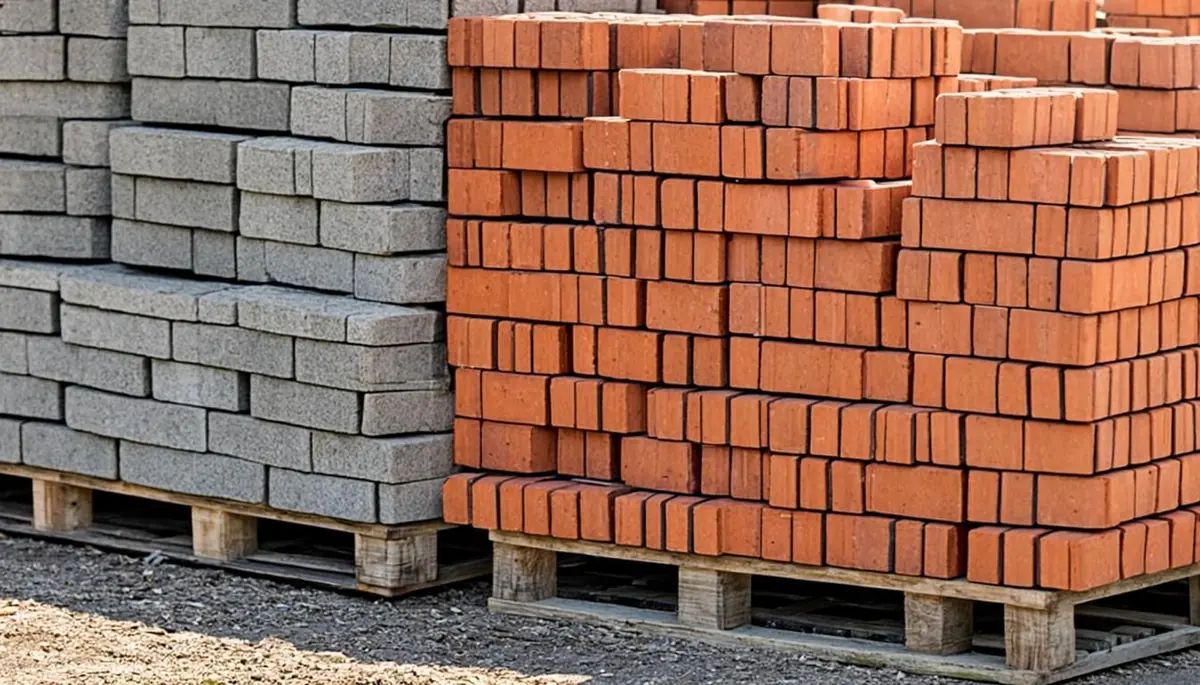
PCC Blocks vs Awwal Bricks in Jhelum: Which Is Cheaper and Easier?
Two brothers pulled up at our yard last month with an empty pickup. The elder wanted blocks for his compound wall — "saaf kaam hota hai, jaldi ban jata hai." The younger wanted awwal bricks — "ghar eent se hi banta hai." Both were right, which is exactly why this argument never ends at construction counters. Here is the honest comparison, including the "which is cheaper" maths most people do wrong.
What is a PCC block?
A PCC block is a machine-pressed concrete block — cement, sand and crush, vibrated and cured. It comes in two families:
- Solid blocks — heavy, strong, used for compound walls, load-bearing work and anything that takes weight.
- Hollow blocks — lighter with two or three cores, faster to lay, popular for partitions and large walls where weight matters.
Common sizes around Jhelum: 8 × 8 × 16 inch, 6 × 8 × 16 inch and a thin 4 × 8 × 16 inch for partitions. An 8-inch block is roughly the concrete cousin of a 9-inch brick wall.
Block vs brick, side by side
| PCC block (8 × 8 × 16) | Awwal brick (9 × 4.5 × 3) | |
|---|---|---|
| Units per sq ft of wall | about 1 | about 10 |
| Weight per piece | heavy (two hands) | light (one hand) |
| Mortar needed | less — big units, few joints | more — every 3-inch course is a joint |
| Plaster needed | less — flat machine faces | more — brick surfaces drink mortar |
| Wall speed | faster — fewer pieces to lay | slower — but every mason knows brick |
| Cutting and chasing | needs a grinder, dustier | cuts with a chisel, easier touch-ups |
| Nailing and fixing | hollow cores need filling first | grips plugs and nails well |
Neither one "wins" the table — each row is a different day on your site.
Which is cheaper?
Here is the mistake: people compare the rate of one block against the rate of ten bricks and stop there. That is half the bill. The finished wall bill has three parts — units + mortar + plaster — and blocks usually pull ahead on the other two, because fewer joints mean less mortar and flat faces mean thinner plaster.
So the honest method:
- Get the block rate and the brick rate on the same day (rates change daily — yesterday's comparison is a guess).
- Compare cost per running foot of finished 9-inch wall, including mortar and plaster, not per piece.
- Ask the mason's rate too — blocks lay faster, so labour hours shrink on long straight walls.
Run those three numbers and the cheaper answer falls out for your wall, on your date, from your rates. We quote both block and brick rates on the phone — call or WhatsApp +92 331 5083 648 — so you can run the sums the same day you decide.
Which is easier to build with?
For speed, blocks — a mason covers a square foot of wall in one or two pieces instead of ten, and straight machine edges pull the wall level faster. For repairs and small fiddly work, bricks — cut them with a chisel, fill any gap, and every mistri in Punjab has laid a lakh of them.
One caution with hollow blocks: walls get chased for electric pipes and fittings, and a hollow core needs filling or a solid block at those points — tell your electrician before the walls go up, not after.
Where blocks make sense — and where bricks still win
Blocks are hard to beat for compound and boundary walls, godowns, shop fronts, plinth filling and non-load-bearing partitions — long, straight, fast walls.
For the main load-bearing walls of a house, awwal bricks remain the default around Jhelum — the local trade, the masons and most structural drawings are built around them. The common middle path we see: bricks in the main structure, blocks in the compound wall and outbuildings. Your engineer gets the final word on what carries load — never settle that at a materials counter.
PCC block rates in Jhelum today
Blocks are quoted per piece and bricks per thousand, and both numbers move with cement and crush rates. We do not print price tables here — a table from last month would mislead you today. Call us for today's block and brick rates, and we supply around Jhelum city (roughly the local Jhelum area); loading and supply are agreed at the time of order.
If you are planning brick walls as well, our brick types guide covers awwal vs fly ash, and the 5 marla bricks quantity guide works out the counts. Whatever you build with, confirm wall sizes and what carries load with your engineer or contractor first — then call us for today's rate and we will load you honestly.
Ordering & Rates — Confirmed on Call
Material rates change daily, so we confirm everything directly with you.
Today's rate, not yesterday's: Cement, steel, bricks, sand, crush and paint rates move with the market, sometimes daily. Call or WhatsApp +92 331 5083 648 and our team confirms the day's exact figure for your brand and quantity in minutes.
Straight, itemised quotes: Tell us your material list — a paper chit, a photo of your plan or just your plot size and stage. You get brand, grade and quantity spelled out, and the figure is locked only with an official order and advance payment.
Everything confirmed personally: Availability, quantities, timing and how the material reaches you — we confirm all of it with you directly before anything is finalised. No surprises at loading.
Full details in our Contact page — or call / WhatsApp +92 331 5083 648 and we will go through your list and today's rate in minutes.
Good to Know Before You Act
Two honest notes about everything published in our guides.
We don't publish fixed rates: material rates in Pakistan change daily, so nothing on this site is a price list. The final and correct rate is always the one our team confirms with you on the day. Call or WhatsApp +92 331 5083 648 for today's exact figure — a rate is locked only with an official order and advance payment.
Guidance, not instructions: quantities, mix ratios and methods described in our guides are general educational guidance for your specific site you should verify — outcomes depend on site conditions, water quality, handling, curing, storage and workmanship. Before you act, always speak with your engineer, contractor or a qualified professional — or ask our team for guidance on materials.
Planning a stage of your project? Contact us first — we will gladly go through your material list, today's rate and the right products for your site before you buy.
Related Articles
10 Mistakes to Avoid When Buying Building Materials in Pakistan (2026)
Most building material losses in Pakistan never show up on a receipt: cement that lost strength in storage, bricks judged by colour alone, sand accepted without a test, steel never weighed. Ten mistakes to avoid — and the simple checks that catch them.
Building Materials List for a 5 Marla House (With Quantities)
The full 5 marla grey-structure material list in one place — bricks, cement, steel, sand and crush quantities, stage by stage, from the yard that supplies Jhelum daily.
Saria Weight Per Foot: 2, 3, 4, 5 & 6 Sutar Chart (2026)
The munshi says one weight, the kanta says another. The sutar-to-weight chart that settles every saria argument: 2 to 6 sutar in mm, kg per foot, per meter and per 40-foot bar.