Wall Painting Order: Putty First or Primer First?
At a 5-marla house in Madina Town last week, I walked into a proper family debate. The painter was saying primer goes first. The owner’s cousin, who painted his own flat in Rawalpindi, was insisting putty comes first. Both were half right — which is exactly why the argument never ends at construction sites.
Here is the order that actually works, and why.
The order on fresh plaster
- Let the plaster cure. Fresh plaster is wet and salty; paint on it peels and shows patches. Curing takes weeks — your mason knows when it is ready.
- Wall putty (people call it chalk). One or two coats fill the fine pores and give a smooth face. Sand it down after it dries.
- Primer. Now the primer goes — after putty and sanding, not before. Primer seals the surface, evens out absorption, and gives the emulsion something to grip.
- Two top coats of emulsion. The first coat thinned per the tin, the second full. Two coats is the standard for a proper finish; one coat always looks “kachcha” in daylight.
So the answer to the classic fight: putty first, then primer, then paint. The cousin was remembering old repaint jobs, where primer is often only used on repaired patches.
Repainting an old wall?
Wash the wall, fill the cracks, spot-putty the holes, sand the patches — and then primer on the repaired spots (or the full wall if you are changing from dark to light colour). A full old wall in decent condition often takes emulsion directly after cleaning, but patched areas drink paint differently, and without primer on them you will see cloudy spots after the first coat.
Why primer deserves its own step
Primer is cheap and boring, so every few years someone decides to skip it. Then the emulsion gets absorbed unevenly — patchy shine, more coats needed, colours looking duller than the shade card. The primer closes the thirsty surface so your expensive emulsion stays where you put it.
Which paint for which room
We already wrote a full comparison in Distemper vs Emulsion — the short version: emulsion for bedrooms, lounges, anything that gets touched and wiped; distemper is still common for ceilings and stores where cost matters more than washability. For outside walls you want the weather-coat type, and in Jhelum the smart window for exterior painting is the dry months, not monsoon week.
Wood stain for the doors
People ask about doors while buying wall paint. Wood stain soaks into bare wood and keeps the grain visible; varnish and enamel sit on top. Stain then a clear coat is the classic look for main doors. Stain needs bare wood — on an already-painted door it just will not take, so sand it back first or stick to enamel.
The painting-items list (so you buy it all in one trip)
- Brushes: 2" and 4" — cheap ones shed bristles into your wall
- 9" roller with tray and one refill per coat colour
- Sandpaper 120 and 180 grit
- Putty knife and filling knife
- Masking tape for edges, switches and fans
- Drop sheets — old bed sheets work fine
- Rags and one bucket for washing brushes
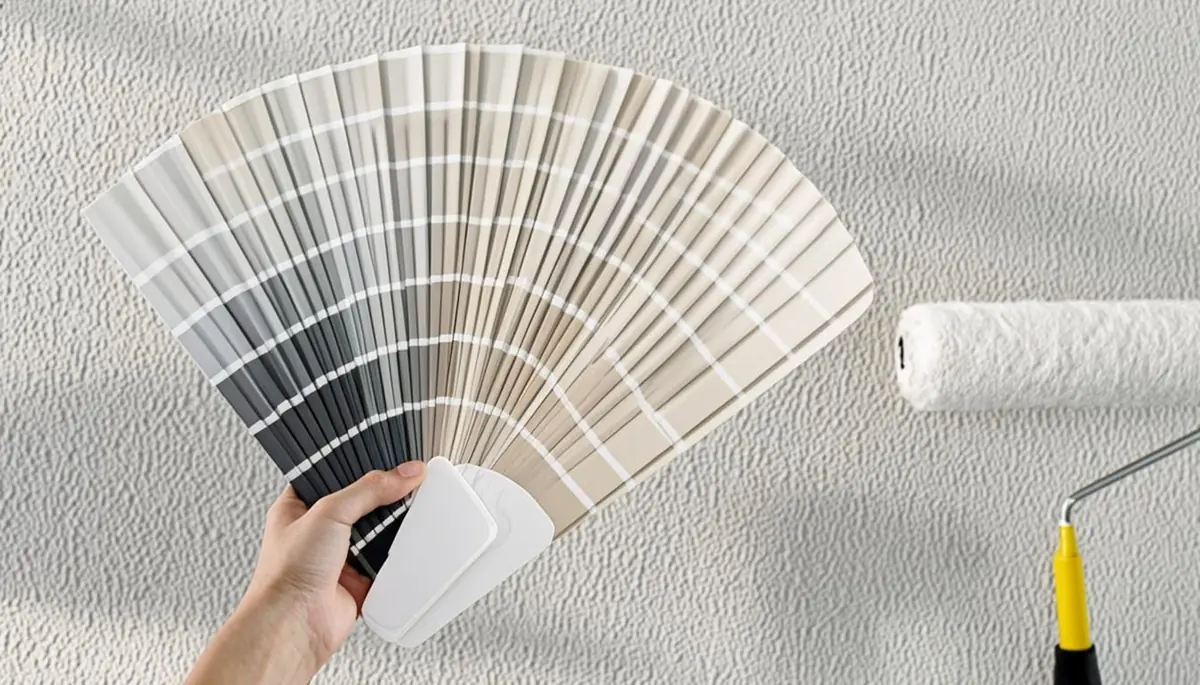
All of this sits at our paint counter alongside the paints themselves. We keep Happilac among the paints we sell — ask for the shade book at the counter. Rates change daily, so call or WhatsApp +92 331 5083 648 for today’s rate of your list instead of guessing from an old screenshot.
For colour ideas, see paint colours and finishes for Pakistani homes, and for how brands differ read paint quality in Pakistan.
Before you paint
One wall, two coats, good prep — that is cheaper than redoing a bad job. And whatever your painter quotes, have him show you the order above; a painter who skips primer to save ten minutes today will cost you a repaint next summer.
Delivery Areas & Charges
Plain and simple — here is exactly how delivery works at Khokhar Traders.
Where we deliver: Locally within about 10–15 km of Jhelum city centre — Jhelum City, Civil Lines, Bilal Town, Kala Gujran, Haji Aima, Kotla Aima, Katchery, Mohamdi Chowk, Chishtian Mohallah, Madina Town, CITI Housing, and many more areas around Jhelum city centre. A little further out? We may still be able to deliver with extra charges — just ask.
Delivery charges: Agreed at the time of order. Share your location with our team and we calculate the exact distance, then confirm a fair delivery charge before anything is loaded. Prefer to save on transport? You are welcome to arrange your own transport.
Ex-shop rates vs delivered rates: Shop materials — cement, iron rebars (sariya), chips, tile bonds, paints, hardware — are priced at ex-shop rates: either we deliver at the agreed charge, or you arrange your own transport. Loose materials — sand, aggregate (crush), soil and gassu for foundation filling, and bricks on a full trolley — usually come with delivery included.
Full-truck cement delivery: We can deliver a full truck of 350–500 cement bags straight to your site (if a bigger truck can safely reach it). A small loader carries only 25–35 bags per trip — one full truck saves you many loader runs and real money on local transport.
Rates change daily: A rate confirmed over the phone is valid for that time of day only. A rate is locked with an official order and advance payment — we confirm the final rate and delivery charge together before dispatch.
Full details in our Shipping Policy — or call / WhatsApp +92 331 5083 648 and we will confirm today's rate and your delivery charge in minutes.
Good to Know Before You Act
Two honest notes about everything published in our guides.
Rates are market estimates and they change daily: any price or rate mentioned in our guides is an indicative market estimate for planning only — material rates in Pakistan fluctuate, sometimes daily. It does not matter what a guide, blog or old quotation says — the final and correct rate is always the one our team confirms with you on the day. Call or WhatsApp +92 331 5083 648 for today's exact price. A rate is locked only with an official order and advance payment.
No warranty on results — always speak to a professional first: quantities, mix ratios, material suggestions and methods described in our guides are general educational guidance, not instructions for your specific site. Results after mixing or using any material in any ratio depend on site conditions, water quality, handling, curing, storage and workmanship — we do not warrant or guarantee any result arising from following general guidance. Before you act, always speak with your engineer, contractor or a qualified professional — or ask our team for guidance on materials.
Planning a stage of your project? Contact us first — we will gladly go through your material list, today's rates and the right products for your site before you buy.
Related Articles
Distemper vs Emulsion Paint — Which One Fits Your Walls and Wallet
The question we hear every finishing season: distemper karwa dein ya paint? The honest difference in washability, lifespan, finish and cost per year — and where each one is the smarter pick for Pakistani homes.
Epoxy Floor Paint: Where It Works and Where It Wastes Money
A workshop owner showed us his peeling green floor — three coats, all flaking in one year. The paint was fine. The floor prep was the problem.
Paint Price in Pakistan (2026) — Emulsion, Enamel & Texture Rates
Paint prices in Pakistan for 2026: gallon rates for wall emulsions, enamels, weather-coat and texture paints, coverage per gallon, and how to calculate paint for a 5 marla house.