Roof Bajri and Brick Ballast: How Much Per Square Foot (Punjab Roof Guide)
Roof Bajri and Brick Ballast: How Much Per Square Foot (Punjab Roof Guide)
Every September, after the first heavy rain, the same phone calls start: water standing on a roof corner two days later, seeping toward the bedroom ceiling. Nine times out of ten, the topping on that slab was laid too thin, or the slope ran the wrong way. The bajri and brick ballast layers on a roof are not decoration — they are the drainage, the insulation and the walkable surface of your house. Here is the layer-by-layer maths we keep behind the counter.
What actually sits on top of your slab
A typical Punjab roof over an RCC slab is a stack of layers, each doing one job:
- RCC slab — the structure.
- Brick ballast (crushed/khadki brick bats), 3 to 4 inches — light body material that lifts the roof and insulates.
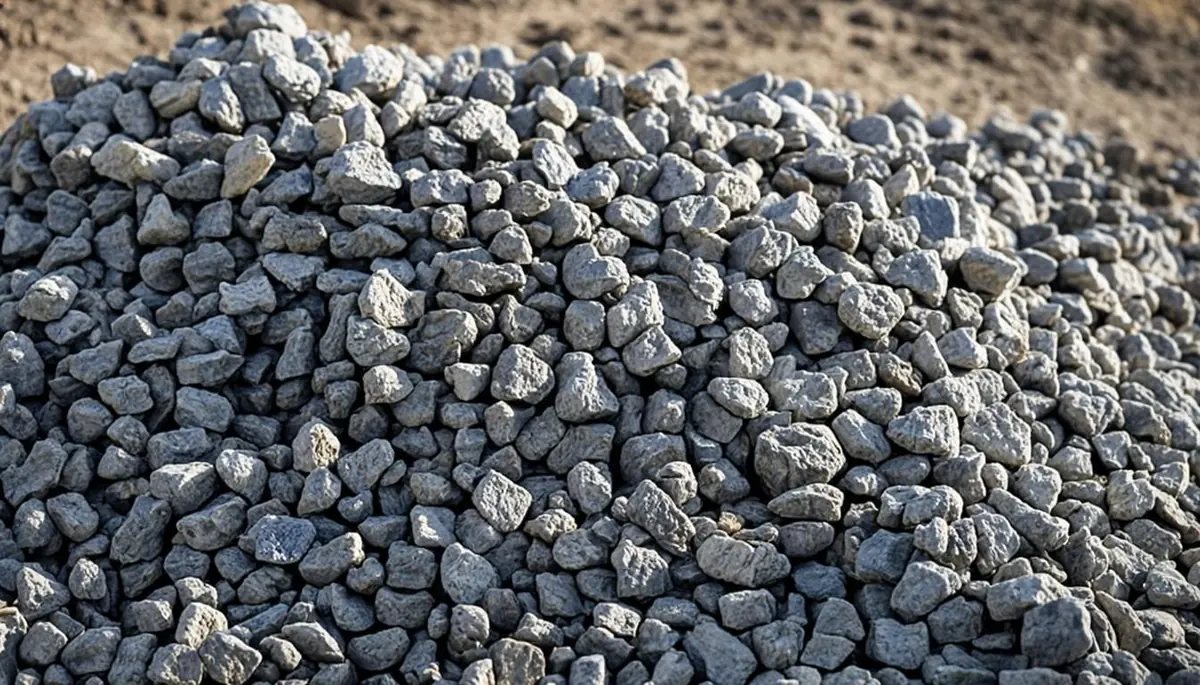
- Bajri (crush/gitti), 1.5 to 2 inches — the drainage and levelling layer.
- Ghaau (fine sand) with cement topping, about 2 inches — the finishing layer that is screeded into the slope (the "lopez").
- Lime or white heat-proof finish — reflects sun, keeps the rooms below cooler.
Spouts sit at the low points so water leaves the roof instead of finding a crack. Stacks vary a little by mason and by engineer — some roofs run thicker ballast, some skip a layer — so confirm your roof's stack with the person who designed your slab.
Bajri per 100 square feet — the table
Volumes are thickness × area. For a standard 100 sq ft of roof:
| Layer | Thickness | Per 100 sq ft |
|---|---|---|
| Brick ballast | 4 inch | ~33 cft |
| Bajri (crush/gitti) | 2 inch | ~17 cft |
| Ghaau sand-cement topping | 2 inch | ~17 cft |
Add roughly 10% extra for slopes, edges and wastage — roofs are never perfectly flat before the lopez goes on. Working in the other direction: per square foot, plan on about 0.33 cft of ballast, 0.17 cft of bajri and 0.17 cft of sand topping.
Is bajri cheaper than ghau?
This question arrives at the counter because the two names sound interchangeable. They are not the same material, and on a roof they are not substitutes — they are teammates:
- Bajri is coarse aggregate — the grit/crush that gives the layer body and lets water travel through it instead of pooling on it.
- Ghaau is fine sand — it makes the smooth finishing screed, the same sand your plaster uses.
A roof needs both, so "which is cheaper" is a little like asking whether a wall is cheaper with bricks or with plaster. What actually saves money is the part people skip: correct thickness, a real slope to the spouts, and no re-doing the topping after the first monsoon. Per-cft rates for both change daily — call for today's numbers — but a roof done right once is the cheapest roof there is.
Margalla crush or Sargodha crush?
Jhelum sits on the trolley routes for both, and both arrive at our yard regularly:
- Margalla crush — hard blue-grey limestone from the Margalla belt, popular around Islamabad and the Potohar side.
- Sargodha crush — the central Punjab workhorse, carried by trolley across the plains.
For roof bajri, whichever arrives with less dust and fewer flaky pieces is the better buy. Two quick checks at unloading: rub a wet fistful — heavy powder coating means dusty crush — and look at the size mix, which should be angular and even, not a pile of chips and slivers. We wrote a full guide on crush sizes and checking: Margalla vs Sargodha crush.
Slope, spouts and the mistakes we see
- Thin ballast to "save material" — the roof loses insulation and the topping cracks sooner.
- No real lopez — a perfectly flat roof is a slowly filling pond; the slope must start at the slab stage.
- Spouts too few or too high — water needs an exit below the topping level, at every low point.
- Topping laid in the middle of a dry June afternoon — it cracks as it cures. Cure it wet, like concrete.
Trolley maths and supply
Ballast, bajri and sand all move by trolley, and trolley sizes vary, so we quote per cft and confirm the trolley size at order time. Our trolley rates within roughly the local Jhelum area of Jhelum city include supply — the load arrives at your gate, and we agree the unloading spot so the layers can start from the right corner. For today's rates on ballast, bajri and ghaau, call or WhatsApp +92 331 5083 648.
Run your roof area through the free aggregate calculator to get cubic feet, then confirm the layer stack and thicknesses with your engineer or contractor — they know your slab and your drainage plan. After that, one call gets the trolleys rolling.
Ordering & Rates — Confirmed on Call
Material rates change daily, so we confirm everything directly with you.
Today's rate, not yesterday's: Cement, steel, bricks, sand, crush and paint rates move with the market, sometimes daily. Call or WhatsApp +92 331 5083 648 and our team confirms the day's exact figure for your brand and quantity in minutes.
Straight, itemised quotes: Tell us your material list — a paper chit, a photo of your plan or just your plot size and stage. You get brand, grade and quantity spelled out, and the figure is locked only with an official order and advance payment.
Everything confirmed personally: Availability, quantities, timing and how the material reaches you — we confirm all of it with you directly before anything is finalised. No surprises at loading.
Full details in our Contact page — or call / WhatsApp +92 331 5083 648 and we will go through your list and today's rate in minutes.
Good to Know Before You Act
Two honest notes about everything published in our guides.
We don't publish fixed rates: material rates in Pakistan change daily, so nothing on this site is a price list. The final and correct rate is always the one our team confirms with you on the day. Call or WhatsApp +92 331 5083 648 for today's exact figure — a rate is locked only with an official order and advance payment.
Guidance, not instructions: quantities, mix ratios and methods described in our guides are general educational guidance for your specific site you should verify — outcomes depend on site conditions, water quality, handling, curing, storage and workmanship. Before you act, always speak with your engineer, contractor or a qualified professional — or ask our team for guidance on materials.
Planning a stage of your project? Contact us first — we will gladly go through your material list, today's rate and the right products for your site before you buy.
Related Articles
10 Mistakes to Avoid When Buying Building Materials in Pakistan (2026)
Most building material losses in Pakistan never show up on a receipt: cement that lost strength in storage, bricks judged by colour alone, sand accepted without a test, steel never weighed. Ten mistakes to avoid — and the simple checks that catch them.
Building Materials List for a 5 Marla House (With Quantities)
The full 5 marla grey-structure material list in one place — bricks, cement, steel, sand and crush quantities, stage by stage, from the yard that supplies Jhelum daily.
Saria Weight Per Foot: 2, 3, 4, 5 & 6 Sutar Chart (2026)
The munshi says one weight, the kanta says another. The sutar-to-weight chart that settles every saria argument: 2 to 6 sutar in mm, kg per foot, per meter and per 40-foot bar.